











































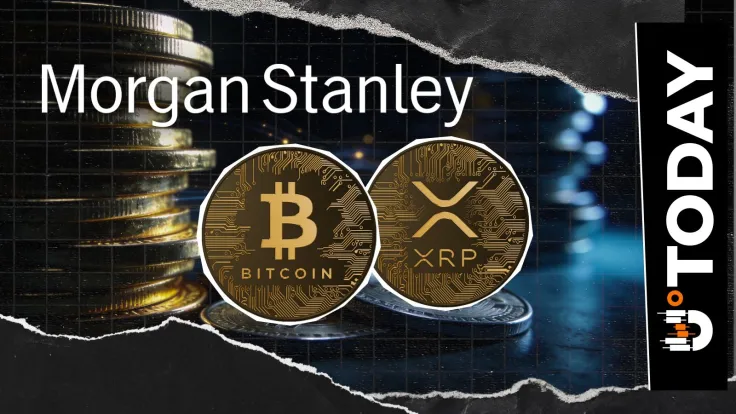
Morgan Stanley has taken a significant step in the realm of digital assets by applying for a national trust bank charter. This move aims to establish a dedicated entity for digital asset custody and staking under the name Morgan Stanley Digital Trust, National Association (MSDTNA). The application was submitted to the Office of the Comptroller of the Currency (OCC) on February 18, 2026, signaling the bank”s deepening engagement in the cryptocurrency sector.
The proposed trust bank is designed to function as a federally chartered institution, focusing on providing comprehensive digital asset services. According to the OCC”s published documentation, the trust will offer custody services for select digital assets, alongside facilitating transactions such as purchases, sales, swaps, and transfers to support client investment activities. Furthermore, MSDTNA plans to implement fiduciary staking services, allowing clients to earn rewards on their digital assets.
Located in Purchase, New York, the trust intends to extend its services nationwide, pending regulatory approval. The OCC”s national trust bank charter framework allows firms to operate under federal supervision, which can streamline compliance processes for custody and fiduciary activities—an attractive feature for cryptocurrency-focused institutions.
This application follows a trend of conditional approvals granted by the OCC in late 2025 and early 2026 to various crypto-focused entities, including Circle, Ripple, BitGo, and Fidelity Digital Assets. Morgan Stanley”s filing adds to a growing list of institutions, such as Coinbase and World Liberty Financial, exploring similar OCC crypto trust structures.
The establishment of the trust bank is part of a broader strategy by Morgan Stanley to expand its digital asset offerings. Recently, the firm appointed Amy Oldenburg to lead its digital asset strategy, reflecting its commitment to this evolving sector. In addition, Morgan Stanley has submitted applications for exchange-traded funds (ETFs) linked to Bitcoin, Ethereum, and Solana, while also partnering with Zerohash to enable cryptocurrency trading for clients using its E*Trade platform.
If the OCC approves the application, Morgan Stanley Digital Trust could become a key player in the custody and management of digital assets, catering to institutional and high-net-worth clients seeking integrated exposure to cryptocurrencies within traditional financial frameworks.
Interestingly, Morgan Stanley”s initiatives indirectly reinforce the narrative surrounding XRP, which is utilized by RippleNet as a bridge currency for expedited cross-border payments. This contrasts sharply with traditional systems like SWIFT, which are often slow and costly. The firm”s actions lend credence to the argument that XRP is more than a mere cryptocurrency; it serves as a vital technological asset in enhancing the efficiency of global payments.
Oldenburg recently participated in the Bitcoin For Corporations conference, where she highlighted the potential of Morgan Stanley to significantly influence the adoption of cryptocurrencies worldwide. Moreover, the firm has been proactive in adjusting its policies to allow broader access to cryptocurrency investment products, previously limiting such offerings to clients with substantial assets.
As the landscape of digital assets continues to evolve, Morgan Stanley”s foray into trust banking could signal a transformative shift in how traditional financial institutions engage with cryptocurrencies.