












































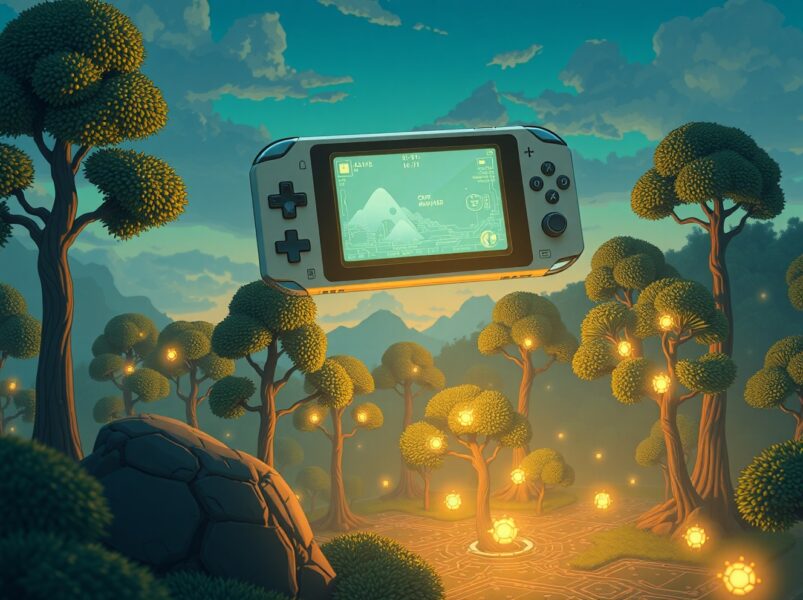
In a bold move, Intel has announced its entry into the handheld gaming sector, unveiling a dedicated platform featuring specialized Panther Lake chips during the CES 2026 event in Las Vegas on January 6, 2026. This strategic initiative directly challenges AMD”s established supremacy in portable gaming hardware.
Intel vice president Daniel Rogers presented the company”s comprehensive gaming platform, marking its most significant hardware initiative since the launch of its Arc GPUs in 2022. The timing of this announcement aligns with a pivotal moment in the evolution of the handheld gaming market, which has been rapidly expanding.
The new platform integrates both hardware and software components tailored specifically for handheld gaming experiences. Intel confirmed the development of a dedicated chip designed for portable devices, building upon its Panther Lake architecture. Notably, these chips are produced using Intel”s advanced 18A manufacturing process, which began production in 2025, promising substantial performance enhancements compared to earlier generations.
From a technical perspective, the Panther Lake processors signify a major advancement for Intel. They are the first products to utilize the 18A manufacturing node, which allows for greater transistor density and enhanced power efficiency—key factors for portable gaming devices where battery life is critical.
The handheld gaming platform will utilize Intel”s Core Series 3 processor technology, with the Panther Lake chips being rolled out across various PC models. However, the variant specifically designed for handheld use will feature optimizations for gaming scenarios, including improved thermal management and power efficiency.
Historically, Intel has considerable experience in gaming hardware development, beginning its journey with chips for gaming PCs in the 1990s. The introduction of the handheld gaming platform presents both challenges and opportunities for the company, as AMD currently holds a significant share of the portable gaming processor market, powering popular devices like the Steam Deck and ASUS ROG Ally.
Industry analysts are keenly observing the competitive landscape following Intel”s announcement, especially as AMD also introduced its new Ryzen 7 9850X3D processor at the same CES event. The announcement from Intel signals an intensification of competition in a growing market segment.
Intel”s approach may benefit from vertical integration, potentially allowing for tighter optimization between hardware and software. Moreover, the company”s manufacturing scale could provide cost advantages. However, AMD”s long-standing relationships with handheld device manufacturers represent a significant hurdle for Intel.
Successful handheld gaming platforms require strong software support. Intel”s recent announcement includes commitments to software components alongside hardware specifications, indicating potential collaborations with game developers and platform providers to enhance compatibility and performance.
While Microsoft”s Windows operating system dominates the PC gaming realm, handheld devices often employ customized software solutions. Details of Intel”s software strategy remain vague beyond the initial announcement, but robust software optimization will be crucial for the platform”s success.
Initial reactions from gaming hardware analysts are cautiously optimistic, given Intel”s substantial resources and engineering expertise. However, AMD”s entrenched market position poses formidable challenges. Intel plans to release more platform details later in 2026, including specific performance metrics and potential partnerships.
The timing of Intel”s announcement coincides with significant industry events, including CES 2026 and the upcoming Disrupt 2026 conference in October, which could serve as further platforms for showcasing innovations.
Intel”s 18A manufacturing process represents a competitive edge, backed by significant investment in advanced manufacturing capabilities. This strategy aims to enhance performance and efficiency, although creating complex gaming processors poses technical challenges.
Optimizing performance, power efficiency, and thermal management is critical for handheld gaming processors. The dedicated chip from Intel is expected to include specialized power management features to prolong battery life during gaming sessions, alongside thermal design innovations to ensure sustained performance without excessive heat.
In conclusion, Intel”s announcement of its handheld gaming platform marks a notable strategic expansion into portable gaming hardware. The Panther Lake-based platform represents the company”s most concentrated gaming initiative to date, signaling a new era of competition in the handheld gaming market. As the industry watches Intel”s progress in 2026, consumers could see improved technology options and potentially lower prices in the market.