































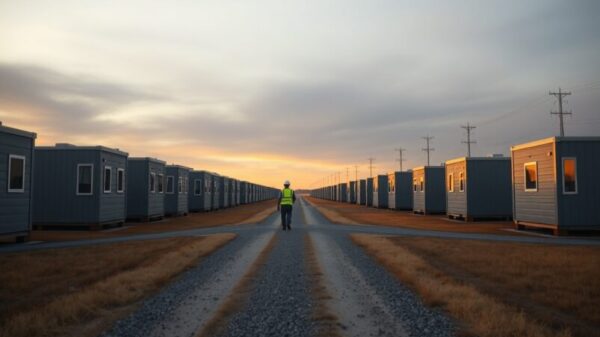













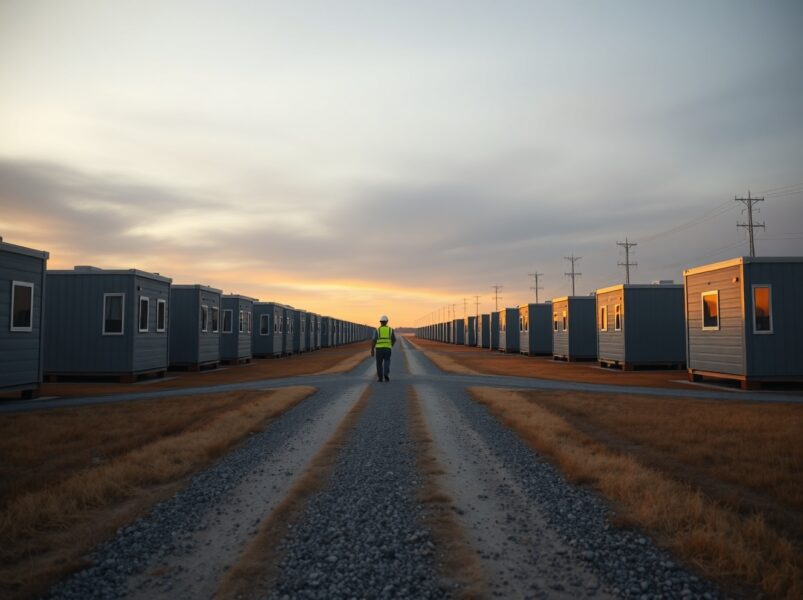
DICKENS COUNTY, Texas — March 8, 2026. The rapid expansion of artificial intelligence infrastructure is catalyzing a unique market for temporary worker housing. Companies are now establishing substantial “man camps” in remote regions to facilitate data center construction. A company with significant experience in managing government detention facilities is at the forefront of this emerging opportunity.
AI man camps have become essential support structures for the large workforce required to construct AI data centers. Developers increasingly depend on these temporary housing solutions, which were originally developed for oil workers decades ago. One example is a former bitcoin mining facility in Dickens County, Texas, which is being transformed into a 1.6 gigawatt data center. Current reports indicate that its construction workers reside in basic yet comfortable housing units equipped with amenities like a gym, laundromat, game rooms, and cafeteria.
This shift to man camps presents logistical challenges, as specialized labor often needs to be brought in from afar. Providing on-site accommodations is no longer just a convenience but a necessity, particularly in remote areas that lack sufficient housing options. The locations chosen for data centers prioritize affordability in land and energy, making man camps a practical solution.
Target Hospitality has signed contracts totaling $132 million to construct and manage the Dickens County camp, which could eventually accommodate over 1,000 workers. The company views the current U.S. data center construction surge as its most promising growth avenue. Chief Commercial Officer Troy Schrenk remarked that it represents “the largest, most actionable pipeline I”ve ever seen.” Target”s experience with large-scale temporary housing enables it to efficiently manage utilities, food services, and sanitation for a transient workforce.
However, Target Hospitality”s background has raised concerns. The company operates the Dilley Immigration Processing Center in Texas, where families are held by U.S. Immigration and Customs Enforcement (ICE). This connection has drawn scrutiny due to previous allegations regarding inadequate food quality and care for children with dietary needs. The transition from managing federal detention facilities to housing tech workers illustrates a significant business pivot, leveraging their logistical skills while diversifying revenue streams.
The surge in data center construction is unprecedented, with analysts predicting that global capacity must double by 2030 to accommodate AI workloads. This construction is often concentrated in areas like Texas, Iowa, and Ohio, which offer cheaper land and access to energy. However, these regions frequently lack skilled labor and housing, underscoring the necessity for man camps.
Today”s modern AI man camps are designed to attract skilled workers in a competitive labor market. The Dickens County facility, for instance, includes amenities aimed at enhancing comfort during long working hours. The camp features a cafeteria serving freshly grilled steaks, catering to the desire for quality meals after demanding shifts. These camps operate as self-sufficient communities, ensuring essential services are available to maintain worker productivity and minimize commute times.
The arrival of large man camps in rural areas brings both economic benefits and challenges. On one hand, local businesses may experience an uptick in demand; on the other, the influx can strain local infrastructure and spark social tensions. Moreover, the economic benefits may be disproportionately reaped by external operators like Target Hospitality rather than local enterprises, creating potential friction within the community.
The rise of AI man camps also raises regulatory and ethical issues. Many rural zoning laws were not designed to accommodate large, temporary residential developments, and building codes for permanent homes may not apply. Developers and operators must navigate these complexities to ensure compliance and safety.
Furthermore, ethical considerations emerge from Target”s previous operational context. The company must clarify how its practices from managing detention centers translate to providing quality housing for construction workers, focusing on employee welfare and retention.
In conclusion, the emergence of AI man camps reflects the rapid pace of data center development. Companies like Target Hospitality are strategically positioning themselves to benefit from this trend, highlighting the ancillary industries sprouting from the AI infrastructure boom. The success of these camps will hinge on balancing efficient operations with the quality of life for workers, illustrating the foundational work required to support a burgeoning digital future.
FAQs
Q1: What is an “AI man camp”?
An AI man camp is a temporary housing community built to accommodate the large construction workforce required to build AI data centers in remote locations.
Q2: Why are man camps needed for data center construction?
Massive AI data centers are often built in rural areas with cheap land and power access. These locations lack sufficient local housing and labor, necessitating man camps for a temporary workforce.
Q3: What company is building the AI man camp in Dickens County, Texas?
Target Hospitality has secured $132 million in contracts to build and operate the man camp supporting a major data center project in Dickens County.
Q4: What are the concerns about Target Hospitality”s involvement?
Concerns stem from the company”s operation of immigration detention centers, where court filings have alleged issues with food quality and care.
Q5: How does the AI data center boom affect local communities?
The boom brings investment and jobs but can strain local infrastructure, with economic benefits potentially flowing more to camp operators than to local small businesses.