



































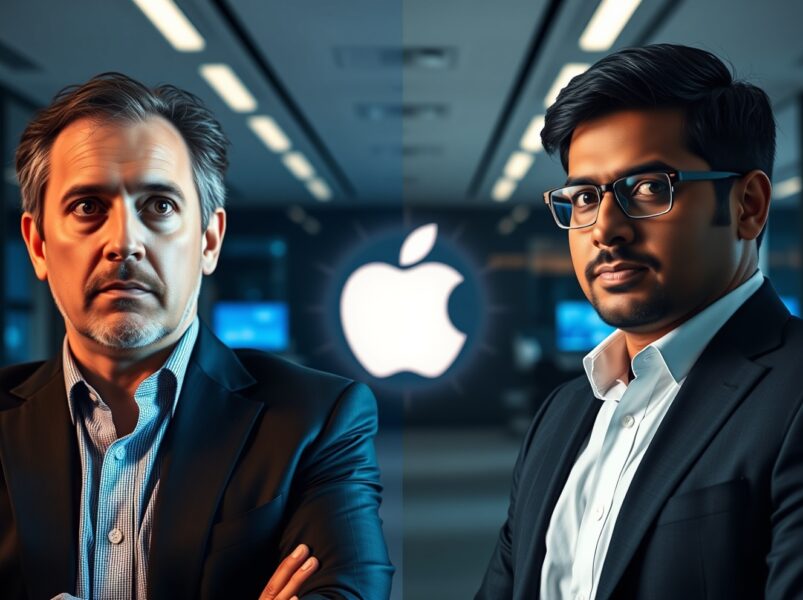
In a significant development for the tech industry, Apple has announced a leadership change in its artificial intelligence division, marking a pivotal moment as John Giannandrea steps down after years of oversight. This transition comes amid notable struggles within the Apple Intelligence framework, particularly following the disappointing overhaul of Siri.
Giannandrea, who has led Apple”s AI initiatives since 2018, has been under scrutiny as the company”s efforts to advance its AI capabilities faltered, culminating in the ineffective launch of Apple Intelligence. The new appointment, Amar Subramanya, is set to take the reins immediately. Subramanya, who previously held prominent roles at Google and Microsoft, is expected to bring fresh insights and a competitive edge to Apple”s AI strategy.
Subramanya”s experience includes 16 years at Google, where he led engineering for the Gemini Assistant, and his subsequent role at Microsoft. This background is particularly relevant as Apple seeks to regain ground in an increasingly competitive landscape defined by AI advancements. The leadership shakeup signals that Apple recognizes its current AI direction is inadequate and requires immediate action.
The challenges faced by Apple Intelligence have been multifaceted. Reports indicate that internal mismanagement and ineffective communication between teams contributed to significant setbacks. Furthermore, the anticipated transformation of Siri, which was marketed as a major advancement, has been indefinitely delayed. Internal testing revealed that many features were non-functional, leading to embarrassment and legal ramifications, including class-action lawsuits from customers who expected innovative AI functionalities with their new devices.
Apple”s approach to AI has traditionally focused on user privacy, emphasizing on-device processing powered by Apple Silicon. However, this strategy has its drawbacks; on-device models tend to be less capable than cloud-based alternatives. As Apple grapples with this dilemma, questions arise about whether Subramanya will steer the company toward a more collaborative strategy, potentially fostering partnerships similar to the rumored integration of Google”s Gemini technology for Siri.
As Subramanya assumes his role, key issues remain unresolved. Will he be able to mend the organizational dysfunction that has plagued Apple”s AI division? Will Apple maintain its privacy-centric philosophy, or will it need to make concessions to catch up in the AI race? The answers to these questions will shape not just Apple”s future, but also its standing among competitors such as Google and Microsoft.
This leadership change at Apple is more than a mere reshuffling of personnel; it signifies a critical acknowledgment of the company”s shortcomings in the rapidly evolving AI domain. As the tech giant navigates this transition, the industry will be watching closely to see if these strategic adjustments lead to a reinvigorated approach to artificial intelligence.