












































The landscape of US credit markets is witnessing remarkable stability, yet Bitcoin finds itself grappling with a significant capital shortage. The New York Federal Reserve”s high-yield distress index has recorded its lowest level ever at 0.06. This index is crucial as it gauges stress within the junk bond sector by analyzing liquidity, corporate borrowing capacities, and market activities.
Historically, this index has soared above 0.60 during periods of market upheaval, such as the 2020 pandemic and the nearly 0.80 peak during the 2008 financial crisis. The current low reading signifies favorable conditions for risk assets, reflected in the positive performance of the high-yield corporate bond ETF (HYG), which has gained approximately 9% for a third consecutive year in 2025, according to iShares data.
Typically, such abundant liquidity and a robust appetite for risk would signal a boost for Bitcoin and other cryptocurrencies; however, recent on-chain data presents a contrasting narrative. Ki Young Ju, the CEO of CryptoQuant, pointed out that inflows into Bitcoin have “dried up,” with capital instead flowing towards equities and gold.
As US equity indices approach historical highs, significant investments are directed toward artificial intelligence and major technology stocks. For institutional investors, the allure of risk-adjusted returns from equities has overshadowed the appeal of cryptocurrencies. This situation poses a dilemma for Bitcoin supporters: despite ample liquidity in the market, cryptocurrencies now occupy a secondary position in the capital allocation hierarchy.
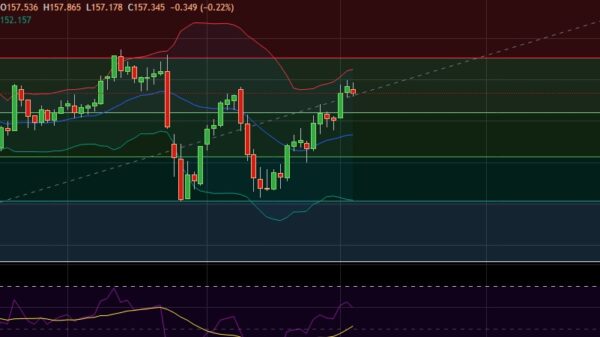
The stagnation in Bitcoin“s derivatives market further underscores this trend. Total open interest in Bitcoin futures stands at about $61.76 billion, equivalent to 679,120 BTC, based on data from Coinglass. Although recent data shows a 3.04% rise in open interest, the price of Bitcoin remains stable at around $91,000, with $89,000 serving as a short-term support level. Binance leads the market with an open interest of $11.88 billion, followed by CME and Bybit.
The steady adjustments in positions across exchanges imply that market participants are more focused on hedging than making directional trades. The conventional dynamics of whale-retail selling have shifted as institutional players adopt long-term strategies, with entities like MicroStrategy, which holds 673,000 BTC, showing no inclination to sell. The emergence of spot Bitcoin ETFs has introduced a new class of patient capital, which in turn has helped to dampen volatility.
Ki Young Ju anticipates a period of sideways movement for Bitcoin, foreseeing no drastic price drops. The decreased risk of panic selling among large holders reduces the chances of significant liquidations, while the lack of immediate catalysts limits upward price momentum.
However, several factors could potentially redirect capital flows back to cryptocurrencies. A rotation from equities, prompted by high valuations, could lead investors to seek alternative assets. Additionally, a more aggressive reduction in Federal Reserve interest rates may heighten the appetite for risk. Regulatory clarity could also entice institutional investors, alongside Bitcoin-specific catalysts such as post-halving supply effects and ETF options trading.
Ki Young Ju remarked that diverse liquidity channels indicate that long-term institutional holdings have altered traditional sell dynamics between whales and retail investors. As funds rotate into equities and other assets, MicroStrategy“s substantial holdings of Bitcoin remain unchanged. Without the emergence of these potential triggers, the crypto market is likely to remain in a prolonged consolidation phase. While the current stability prevents a collapse, it lacks the momentum necessary for significant price appreciation. The ongoing paradox is clear: despite a global liquidity surplus, Bitcoin still waits for its share of capital.