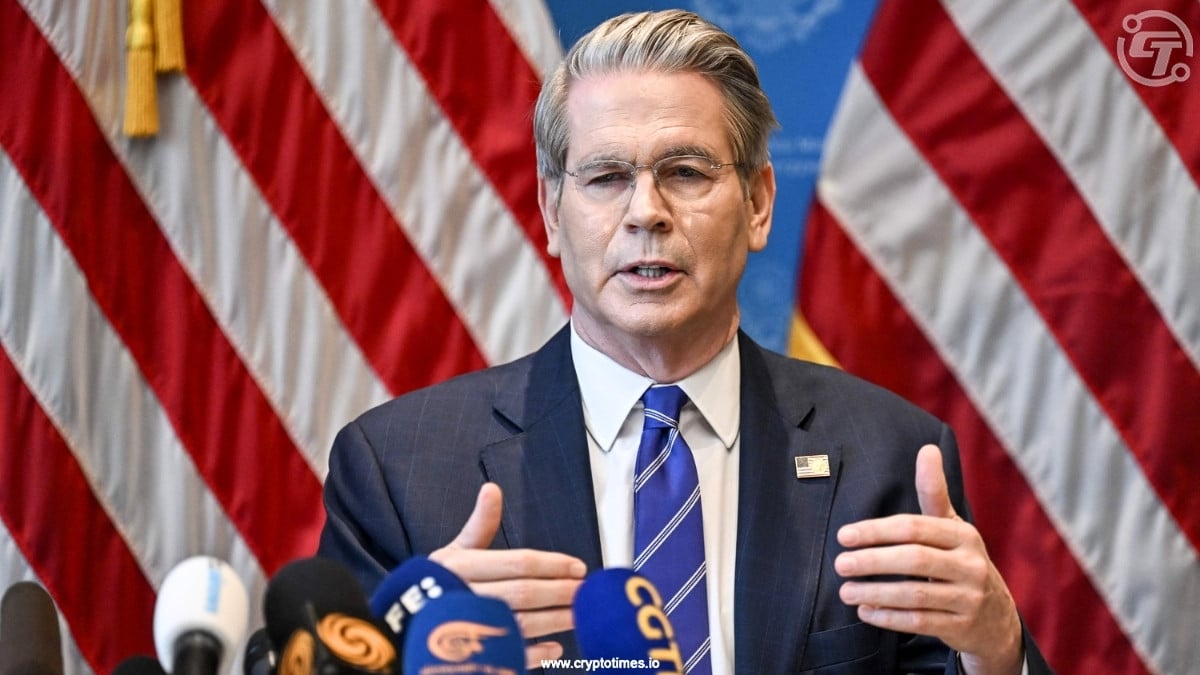
The U.S. Treasury has unveiled a strategic shift regarding its approach to seized Bitcoin, announcing plans to incorporate these assets into a national digital asset reserve. Treasury Secretary Scott Bessent made this declaration during the World Economic Forum in Davos, emphasizing that the government will retain Bitcoin confiscated through enforcement actions, particularly those linked to the Tornado Cash case.
This new policy indicates a significant departure from previous practices where the government sold seized cryptocurrencies. Instead, the U.S. will build its reserve solely from confiscated digital assets without engaging in market purchases. According to analysis from Arkham Intelligence, U.S. government-controlled wallets currently hold approximately 328,000 BTC, translating to a valuation exceeding $30 billion at current market prices. This substantial amount positions the U.S. as one of the largest known holders of Bitcoin globally.
While specific details surrounding the government”s Bitcoin holdings are not fully disclosed, it is understood that these assets primarily stem from criminal investigations and forfeiture proceedings. Bessent reiterated that the government”s strategy does not involve acquiring Bitcoin on the open market, aligning with earlier communications from the Treasury in the previous year.
The decision to retain seized Bitcoin alters market dynamics significantly. Historically, transactions from government wallets have instilled fear among traders, leading to concerns of forced selling that could undermine Bitcoin”s price stability. By opting to hold these assets instead, the Treasury mitigates a recurrent source of selling pressure that has previously influenced market sentiment.
In August of the previous year, Bessent described the reserve as a “digital Fort Knox,” indicating a long-term perspective on Bitcoin as an asset rather than a short-term trading commodity. This approach received legal endorsement in 2025, solidifying the pathway for retaining seized cryptocurrencies rather than auctioning them off.
The timing of this announcement coincides with a notable shift in Bitcoin market sentiment. Recent indicators, such as a “golden cross” in the Fear & Greed Index, suggest a growing confidence among traders following a period of caution. Additionally, on-chain data reveals whale activity and position stabilization, suggesting a healthier trading environment.
As of earlier today, Bitcoin was trading around $91,000, maintaining critical support levels despite ongoing tensions between the U.S. and Europe that have affected broader market conditions. Later in the trading session, Bitcoin experienced a drop to approximately $89,482, reflecting a near 4% decline, although trading volumes surged to $46.8 billion, indicating active market repositioning amidst the sell-off.
For investors, the implications of this new policy are clear: the retained Bitcoin no longer represents a temporary asset aimed at quick liquidation. By committing these holdings to a reserve, the U.S. government is effectively acknowledging Bitcoin”s role as a strategic financial asset. This move does not equate to endorsement but signifies a custodial approach to digital assets.
As global governments navigate their policies on digital currencies, the U.S. strategy exemplifies a balanced approach: regulate, seize when necessary, and hold without attempting to influence market prices aggressively.