




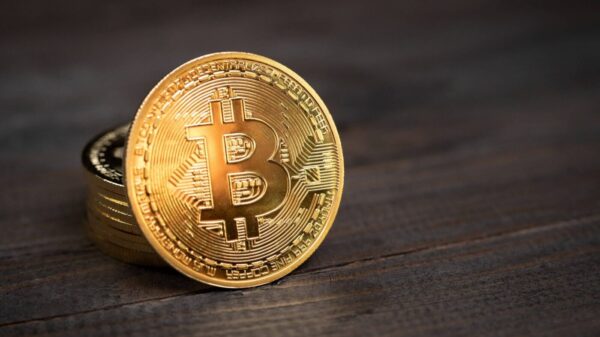

































The U.S. government has officially stated that it has not liquidated any Bitcoin seized from the Samourai Wallet. This announcement clarifies earlier rumors suggesting that the assets had been sold, potentially breaching federal regulations on forfeited digital currencies.
Patrick Witt, Executive Director of the President”s Council of Advisors for Digital Assets, confirmed that the Department of Justice (DOJ) has stated the seized Bitcoin “have not been liquidated and will not be liquidated.” Witt emphasized that these assets will continue to be held on the U.S. government”s balance sheet as part of its Strategic Bitcoin Reserve.
This clarification comes in response to reports earlier this month alleging that prosecutors in the Southern District of New York (SDNY) had sold Bitcoin that was forfeited from developers linked to the Samourai Wallet. Such a sale would have contradicted Executive Order 14233, which requires that forfeited Bitcoin be retained rather than sold.
Witt further indicated that the DOJ has verified that the seized digital assets are still in the possession of the U.S. government and that they comply with the executive order. This statement directly counters previous claims suggesting that the Bitcoin had already been sold following a plea agreement involving Samourai.
While the DOJ has not elaborated on the operational management of these assets, the announcement alleviates concerns regarding whether the seizure affected market activity or contributed to fluctuations in Bitcoin prices.
On-chain analysis from Arkham corroborates the DOJ”s assertion. Publicly accessible wallets attributed to U.S. government holdings show no significant decline in Bitcoin balances that would indicate a sale related to the Samourai case. As of mid-January, on-chain metrics reveal the U.S. government still retains over 328,000 BTC, valued at more than $31 billion, along with smaller amounts of ether and stablecoins. There have been no unusual outflows connected to the Samourai forfeiture.
The confusion regarding the status of the seized Bitcoin may stem from historical precedents where the U.S. government has auctioned off seized Bitcoin, notably in cases like Silk Road. This history has influenced market expectations, leading many to assume that newly forfeited Bitcoin would similarly be sold. However, Executive Order 14233 marks a significant policy change, mandating that certain seized Bitcoin be preserved as a strategic asset rather than liquidated. The Samourai case seems to fit this updated framework, signifying a shift away from previous practices.
At this juncture, the DOJ”s confirmation effectively resolves questions about whether the Bitcoin associated with Samourai has entered the market.