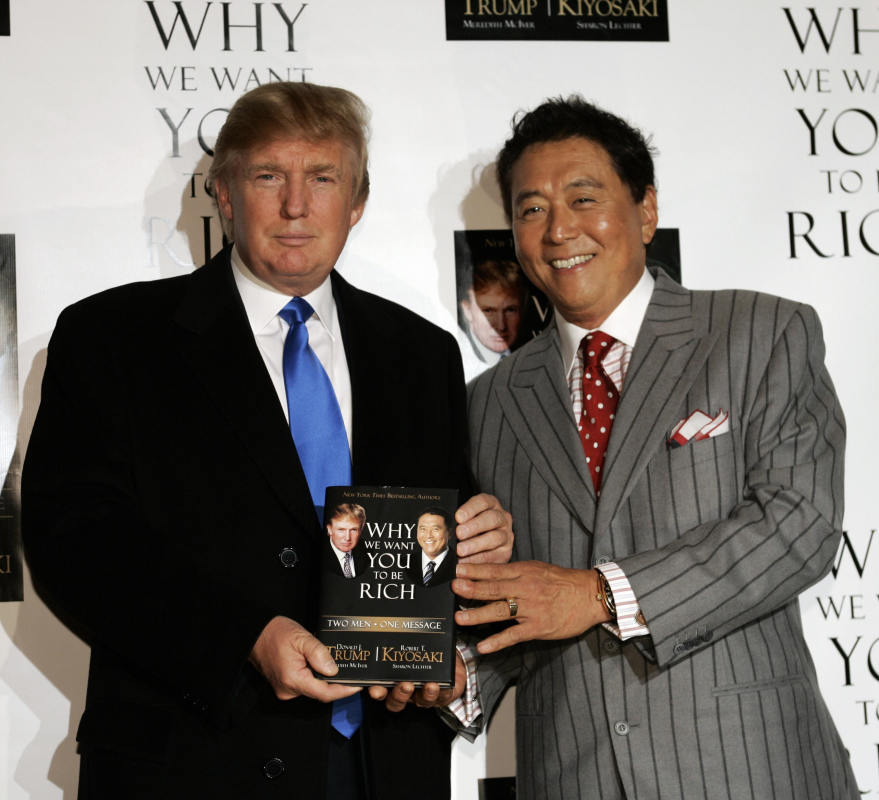
In a surprising turn, Robert Kiyosaki, the author of “Rich Dad Poor Dad,” has disclosed his decision to sell his gold and silver holdings in favor of investing in Bitcoin (BTC). In a video he published on January 25, 2025, Kiyosaki stated that he has been accumulating silver since 1964 but is now trading it to increase his Bitcoin investments.
Kiyosaki”s rationale for this shift is rooted in his critical view of the U.S. economic landscape. He highlighted the ballooning federal debt and rampant money printing as factors contributing to the devaluation of the U.S. dollar. In his video, he remarked that the prices of gold and silver have surged, yet he believes that Bitcoin represents a more compelling investment opportunity in the current climate.
Reflecting on the past year, gold”s price has climbed by 77% to reach $4,988.56 per ounce, while silver has seen an even more dramatic increase of 213%, now priced at $103.3 per ounce. In contrast, Bitcoin has experienced a decline of 17%, landing at $86,393.06. This juxtaposition has led many to question Kiyosaki”s judgment in favoring cryptocurrency over precious metals.
As Kiyosaki continues to advocate for Bitcoin, he argues that the real issue lies not in the volatile prices of individual assets, but rather in the persistent devaluation of the dollar, which he believes will ultimately drive the value of Bitcoin, Ethereum (ETH), and precious metals higher. He has voiced concerns over the effectiveness of the current government officials managing the economy, labeling them as “incompetent” despite their educational credentials.
In light of these economic dynamics, Kiyosaki maintains a strategy focused on acquiring assets like Bitcoin, Ethereum, and precious metals, emphasizing that these investments are a hedge against the inevitable decline of the fiat currency system.
This shift in asset allocation by such a prominent figure has sparked discussions within the cryptocurrency community, particularly as Kiyosaki”s earlier teachings emphasized the importance of assets over liabilities. His latest moves call into question traditional investment wisdom and highlight the evolving perspectives on wealth preservation in today”s economic environment.