




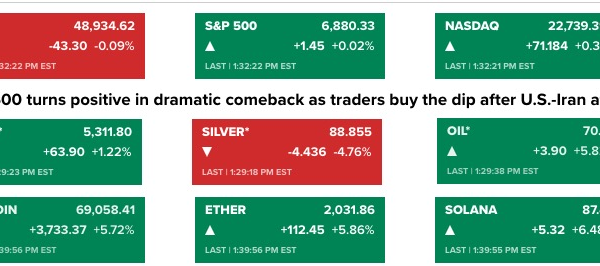






































On March 1, the closure of the Strait of Hormuz, a vital oil transit route, triggered a sharp surge in oil prices, with Brent crude exceeding $95 a barrel. This disruption, which affects approximately 20% of global oil trade, sent shockwaves through energy markets and brought U.S. inflation perilously close to 5%. Meanwhile, Bitcoin has shown remarkable resilience, maintaining a stable position at $67,000 amidst the turmoil.
Energy stocks reacted positively in early trading, with some companies experiencing gains of up to 15%. The immediate implications for the Federal Reserve are significant, as they face increased price pressures that could necessitate a quicker adjustment to interest rates than previously anticipated. In contrast, traders in the cryptocurrency market have reported a 40% spike in trading volumes on platforms like Coinbase, though this activity appears to be more about portfolio repositioning rather than widespread panic.
A spokesperson from Coinbase noted, “We”re seeing increased activity but Bitcoin“s holding steady.” Some analysts suggest that the current geopolitical chaos might even work in favor of Bitcoin, with potential for it to be viewed as a safe haven asset. However, the situation remains fluid, and the next few hours are likely to provide more clarity.
Goldman Sachs has issued a cautionary note to clients, predicting “significant volatility ahead” across both traditional and digital asset markets. The bank”s commodity desk warned that if the closure persists, oil prices could approach $100, a scenario that has dire implications for consumers while possibly benefitting Bitcoin proponents who advocate its role as digital gold.
Meanwhile, Tesla, which holds substantial Bitcoin assets, is closely monitoring the developments. Although Elon Musk has yet to comment on the situation, the financial dynamics could bolster his company”s energy storage business if oil prices remain elevated. In pre-market trading, Tesla”s stock surged by 8%.
The U.S. Department of Energy is evaluating options, likely preparing to tap into the Strategic Petroleum Reserve if the crisis escalates. Secretary Jennifer Granholm”s office has stated they are “monitoring the situation.” This proactive stance is crucial as rising gas prices could further complicate an already tenuous inflation landscape.
European Central Bank President Christine Lagarde has expressed concerns over the implications of rising energy costs, indicating that the ECB”s interest rate decisions are now more complex due to these pressures. In response to the crisis, OPEC has called an emergency meeting, recognizing that a major supply disruption alters the production balance significantly. Saudi Arabia and the UAE could potentially increase output, but adjustments to oil infrastructure take time.
Changpeng Zhao, CEO of Binance, reassured users that his exchange is functioning normally despite the heightened trading activity. The stability of Bitcoin during this crisis has surprised many, particularly those who have positioned it as a hedge against geopolitical instability. However, its performance will be closely watched, especially if oil prices surge into triple digits.
The International Energy Agency has added its voice to the chorus of warnings regarding potential supply chain disruptions, emphasizing that while alternative shipping routes exist, they come with increased costs and delays. Consequently, consumers and businesses alike may have to brace for prolonged higher prices until the Strait of Hormuz reopens.
As Wall Street prepares for a volatile trading environment, energy stocks are likely to thrive, while sectors such as airlines and shipping may suffer. The VIX volatility index has already increased by 25%, indicating traders are bracing for more turbulence. Interestingly, Bitcoin miners could find some benefits in the chaos, as a rally in Bitcoin driven by safe-haven demand might offset the negative impact of rising energy costs on their profit margins.
With no clear timeline for the reopening of the Strait, diplomatic efforts are ongoing. Oil traders are currently pricing in weeks of disruption, while Bitcoin”s stability at the $67,000 mark remains a focal point for market observers.