Economist Lyn Alden has provided insights into the Federal Reserve”s monetary policy, suggesting that the upcoming phase of balance-sheet expansion will be slow and subtle, rather than marking the onset of a major Bitcoin supercycle. Alden emphasizes that the Fed is likely to increase its balance sheet by $20–$25 billion monthly, aligned with GDP growth, which is expected to provide a steady flow of liquidity.
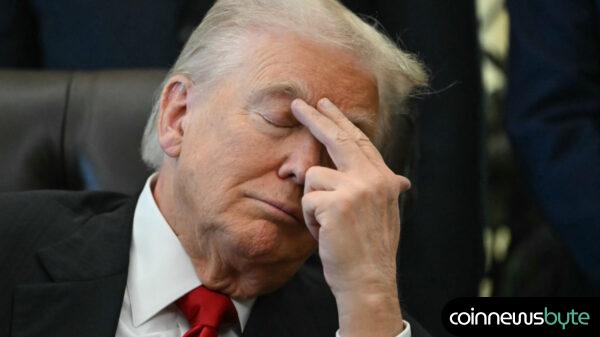
As President Donald Trump nominates Kevin Warsh for the chair of the US Federal Reserve, market participants are grappling with the potential implications of Warsh”s historically hawkish views. Alden notes that this could create uncertainty, yet the more significant narrative may revolve around a gradual return to balance-sheet growth, rather than a sudden shift toward aggressive monetary easing.
In her recent newsletter, Alden highlighted that the Fed”s strategy will likely involve a measured expansion of its balance sheet in response to broader economic growth and enhanced banking activity. This approach supports the idea of consistent liquidity infusion into the financial system, which diverges from the notion of a large, one-time stimulus.
Typically, balance-sheet growth is perceived as “money printing,” despite primarily occurring through digital operations rather than physical cash. The Federal Reserve expands its balance sheet by purchasing assets such as government bonds, which injects capital into the banking sector, making credit more accessible.
Alden argues that such an environment tends to favor scarce assets that serve as stores of value, including Bitcoin (BTC) and gold. She points out that limited supply assets are likely to perform well in this landscape. However, she also cautions investors about potential overheating in certain market segments, advising them to seek out undervalued opportunities instead of following the most popular trends.
As of now, Bitcoin is trading at approximately $71.1K, reflecting a 2.8% increase within the last 24 hours, according to data from CoinMarketCap. This price movement indicates a growing interest in digital assets amidst evolving monetary policies.
For further insights, Alden”s analysis underscores the importance of monitoring the Federal Reserve”s actions and their impacts on the cryptocurrency landscape, particularly for assets like Bitcoin and gold that are often viewed as hedges against inflation and currency devaluation.