





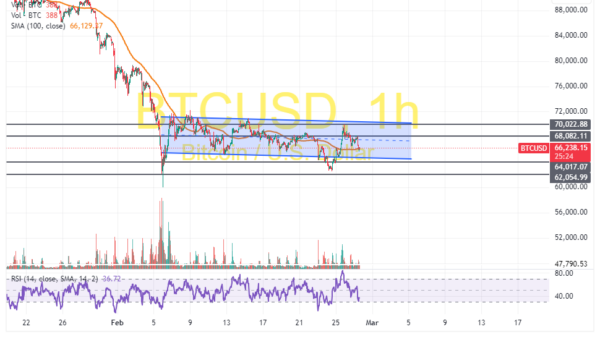








































Major financial institutions and corporate treasuries are rapidly increasing their hedging strategies in the Bitcoin derivatives market, building a substantial $1.5 billion protective barrier as Bitcoin tests the crucial $60,000 support level. This notable escalation in institutional hedging, primarily through long-dated put options, indicates a significant shift in how these investors manage risk amid market volatility.
The dramatic rise in demand for protective positions has been confirmed by data from top derivatives exchange Deribit, where open interest for put options with strike prices beneath $60,000 has surged to this unprecedented figure. This concentration of activity not only highlights the urgency among institutional players but also showcases their strategic adaptations in response to market conditions.
According to Jean-David Péquignot, Chief Commercial Officer at Deribit, this spike is particularly notable as it encompasses the largest position across all contracts on the exchange. The buyers are predominantly recognized entities, including Bitcoin spot ETF issuers and corporate treasury teams that have integrated BTC into their financial strategies.
This evolution reflects a maturation of the market where sophisticated hedging was once reserved for over-the-counter (OTC) transactions. Now, the emergence of regulated, liquid derivatives platforms has enabled institutions to execute these strategies with increased transparency and efficiency. The focus on longer-dated options, extending six months to a year, demonstrates that these investors are securing their long-term holdings rather than merely speculating on short-term price movements.
Understanding the mechanics of these hedging instruments is essential. A put option grants the buyer the right, but not the obligation, to sell an asset at a predetermined price before a specified expiration date. By purchasing puts below $60,000, institutions are effectively insuring against price declines, with the potential to offset losses in their underlying holdings.
The $55,000 to $60,000 range has emerged as a critical safety net, while longer expiration periods afford coverage through anticipated market fluctuations. The premiums paid for these options reflect the perceived risks and represent a strategic expenditure aimed at preserving capital.
Insights from Péquignot suggest this trend should not be viewed as a sign of impending bearish sentiment but rather as a prudent aspect of portfolio management. He emphasizes that active buyers include ETF investors and corporate treasury teams, which further solidifies the institutional nature of the flows. This contrasts sharply with retail-driven FOMO (fear of missing out) that often characterizes market tops.
Additional factors contributing to this shift include macroeconomic concerns such as sustained higher interest rates, geopolitical tensions, and potential regulatory changes. Institutions that have recently entered the market near the $60,000 price level are likely using hedging as a means to secure their positions and mitigate the risk of immediate losses.
When comparing the current derivatives environment to previous market cycles, the current landscape is markedly different. The 2021 bull market was characterized by speculative call buying, while the current situation reflects a more balanced approach with significant put activity, demonstrating a shift towards risk-aware institutional behavior.
This large-scale hedging initiative is creating a dual impact on the market. On one hand, it may lead to a “gamma wall” around the $60,000 mark, where market makers must adjust their positions dynamically. Conversely, it could also provide stability, as substantial buying interest may materialize from option exercises.
The increased hedging demand, tied to the successful launch of U.S. spot Bitcoin ETFs, marks a pivotal moment for cryptocurrency markets. Institutions are now entering the space with strict risk management protocols, validating the growth and reliability of crypto derivatives markets.
In conclusion, the formation of a $1.5 billion hedging position below the $60,000 threshold signifies a critical evolution in the cryptocurrency space. It underscores the adoption of professional risk management practices and positions Bitcoin as a serious asset class, paving the way for further integration into the global financial system.