



























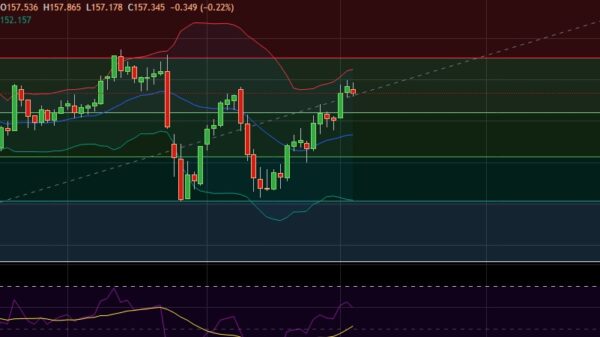


















Institutional interest in Bitcoin exchange-traded funds (ETFs) has dramatically increased at the beginning of 2026, suggesting a potential recovery for Bitcoin if this demand extends beyond regulated products. In just the first two days of trading, U.S. spot ETFs reported net inflows totaling $1.2 billion, highlighting a renewed enthusiasm for direct exposure to BTC through compliant channels.
Bloomberg ETF analyst Eric Balchunas noted that if this momentum persists, it could lead to an impressive $150 billion in net inflows annually. He characterized the early 2026 performance as “lion-like,” recalling that ETFs attracted $22 billion in a more challenging market environment in 2025.
On January 2, U.S. spot products recorded about $471 million in net inflows, which was followed by another $697 million on January 5. However, this trend saw a reversal on January 6, with approximately $243 million in outflows. This shift coincided with Bitcoin”s price stalling near the $94,000 mark following an initial bounce.
Analysts have attributed the late-2025 ETF outflows to hedge funds unwinding positions tied to basis trades. These funds had been actively capitalizing on the price discrepancies between spot and futures markets, but such activities diminished as yield compression set in. A significant indicator was the drop in futures basis yield on the Chicago Mercantile Exchange (CME), falling from about +10% to nearly 5%, which reduced the appeal of carry trades.
Moreover, according to analyst James Van Straten, the early 2026 buying in ETFs has not led to a significant increase in CME”s open interest. This lack of renewed leverage suggests that the recent inflows are likely driven by long-term investors rather than speculative players. Van Straten observed that while BTC has been reaching higher highs, CME”s open interest remains low, indicating that much of the exposure is unhedged.
Should Bitcoin ETFs continue to attract stable inflows without igniting a new wave of leveraged positions on CME, analysts believe a more constructive price recovery could be on the horizon. In such a scenario, BTC might push beyond the current resistance around $94,000. Additionally, a more stable derivatives environment would lessen liquidation risks during price pullbacks, potentially allowing for prolonged rallies if institutional spot demand escalates throughout 2026.
Nevertheless, ETFs represent only a fraction of the overall institutional demand for Bitcoin. Broader market dynamics also depend on retail participation, corporate treasury demand for BTC, and sophisticated individual investors who build positions over time. On-chain data from CryptoQuant reveals that despite the influx of institutional capital, overall demand for Bitcoin remains weak, with metrics indicating negative sentiment.
A sustainable Bitcoin rally will likely require a clear shift in demand back into positive territory. Until that shift occurs, market resistance levels will continue to limit upward movement. Recently, Bitcoin faced rejection in the $94,000 to $96,000 range, a critical resistance zone that has persisted since late November. This area remains the key barrier before Bitcoin can make a decisive push towards the psychological threshold of $100,000.
In summary, while U.S. spot Bitcoin ETF inflows surpassed $1.2 billion during the first two trading days of 2026, they were followed by approximately $243 million in outflows on the subsequent day. Furthermore, the decline in CME open interest suggests that leveraged traders are less active than during the peaks of 2025. At present, robust ETF demand has not yet converted overall Bitcoin demand into positive territory. A sustained breakout above the $94,000 to $96,000 ceiling will likely require ongoing institutional inflows and a broader improvement in market risk appetite.