






































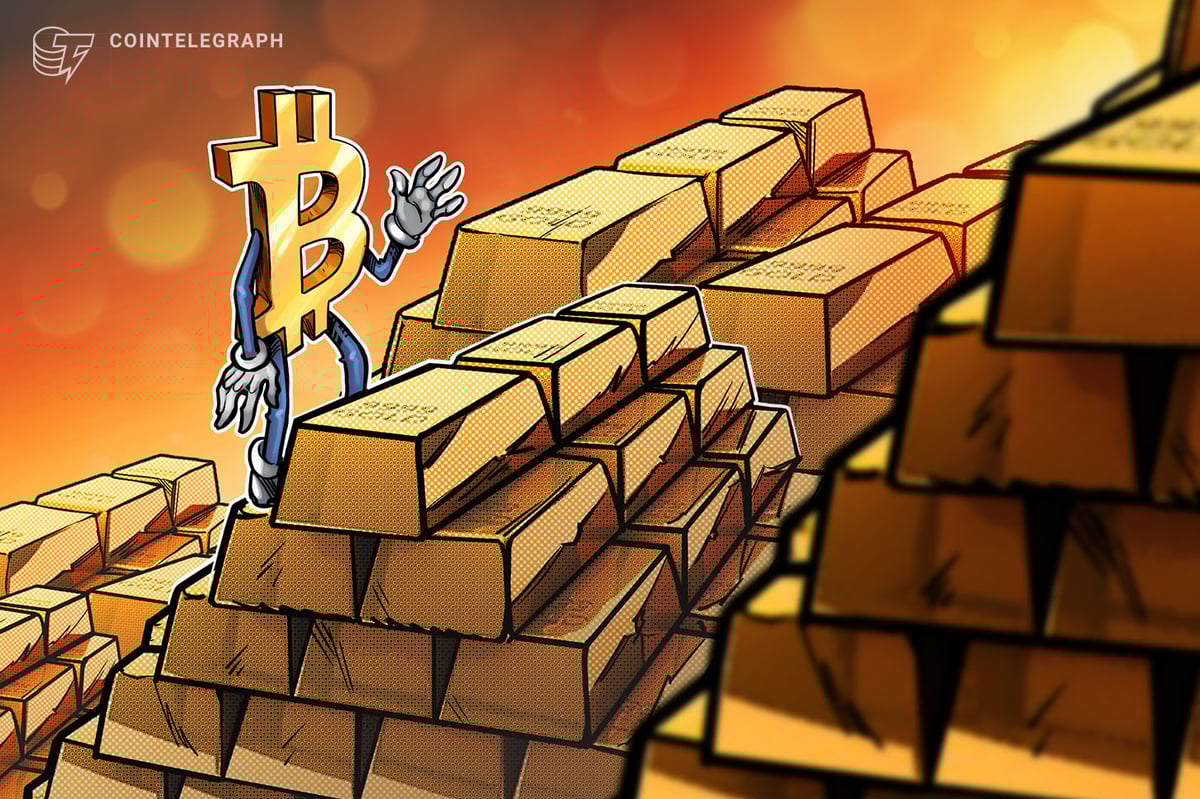
Bitcoin (BTC) is currently seen as undervalued when compared to gold and the global money supply, suggesting a possible reversal in its price trajectory. This insight comes from Samson Mow, CEO of the Bitcoin technology firm Jan3, who shared his analysis on social media platform X. Mow noted that Bitcoin is trading approximately 24% to 66% below its trend relative to gold”s market capitalization and the global money supply, while gold itself appears overextended.
As of Friday, April gold futures closed at $5,247.90, while the tokenized gold, PAX Gold USD, was trading at $5,404.14. Mow emphasized the importance of Bitcoin”s Z-score, a statistical measure that helps determine how far the current price is from its historical average. A Z-score of 0 indicates that the price aligns with the average, while a score above 0 suggests it is above average levels, and below 0 indicates a lower trading price.
When the Z-score of the Bitcoin-to-gold ratio dips below -2, historically, this has often preceded substantial price rallies for Bitcoin. Currently, the Z-score stands at approximately -1.24. Data from TradingView reveals that this metric fell below -3 in November 2022, coinciding with the collapse of the crypto exchange FTX. Following that drop, Bitcoin”s price surged by more than 150% over the subsequent year.
A comparable scenario occurred during the Covid crash in March 2020, when the Z-score dropped below -2, leading Bitcoin to a low of approximately $3,717. In the year that followed, Bitcoin experienced an increase exceeding 300%, eventually reaching an all-time high of about $69,000 in November 2021.
While Mow”s analysis paints a positive picture for Bitcoin, it contrasts sharply with the predictions of some market analysts who foresee continued struggles for the crypto sector. These analysts suggest that Bitcoin might trend towards the $50,000 mark, drawing parallels to the bear market of 2022 that saw Bitcoin drop over 50% from its peak to a low of $60,000.
As the market navigates through periods of uncertainty, particularly with geopolitical tensions and investor sentiment fluctuating, the implications of Mow”s insights could be significant for traders and investors looking to capitalize on potential market movements.