













































The latest data indicates that U.S. spot Bitcoin exchange-traded funds (ETFs) faced a significant outflow of $243 million on Tuesday, effectively halting a robust two-day inflow trend. This decline comes after these products welcomed over $1.16 billion in net inflows at the beginning of the year, demonstrating a fluctuating investor sentiment in the market.
Leading the outflow was Fidelity”s FBTC, which saw a withdrawal of $312.24 million. This was closely followed by $83.07 million from Grayscale”s GBTC, while Grayscale”s Mini Trust also reported $32.73 million in outflows. Additionally, redemptions occurred in Ark and VanEck products, contributing to the overall retreat.
In contrast, BlackRock”s IBIT ETF emerged as a noteworthy exception, attracting $228.66 million in net inflows on the same day, making it the only ETF to register gains during this period. To date, IBIT has amassed a remarkable $888 million in net inflows across the first three sessions of 2026.
Market analysts suggest that the recent outflows from Bitcoin ETFs should be viewed as a routine rebalancing rather than a reflection of shifting investor sentiment or increasing risk aversion. As Bitcoin maintains a stable price around $92,034—down 1.72% within a 24-hour period—the cryptocurrency demonstrates notable resilience in the face of these withdrawals.
While Bitcoin ETF inflows have slowed, there has been a notable capital rotation into altcoins, including Ethereum, XRP, and Solana. Spot Ethereum ETFs recorded $114.7 million in net inflows, despite some redemptions from Grayscale and Fidelity. Similarly, XRP and Solana ETFs experienced inflows of $19 million and $9 million, respectively.
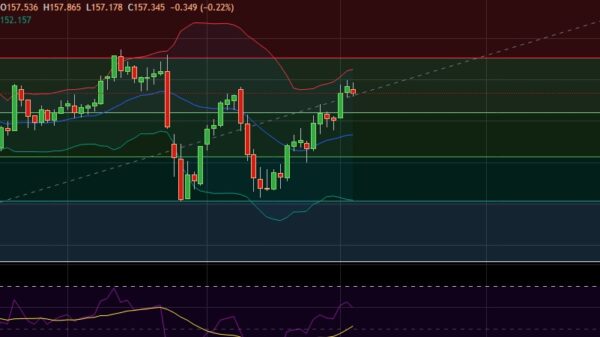
This trend suggests that traders are seeking broader exposure beyond Bitcoin, particularly as price volatility remains a concern. Technical analysis indicates that Bitcoin”s recent price movement may mimic a typical relief rally seen during a distribution phase. This resembles patterns observed in the 2021-2022 cycle, where the market exhibited phases of accumulation, markup, and distribution, with potential for further markdown.
Despite the current market dynamics, stronger sentiment compared to previous cycle peaks introduces an element of uncertainty, potentially delaying or disrupting a more profound correction. While short-term momentum appears positive, the overarching trend may still lean bearish, although various outcomes remain plausible.