



























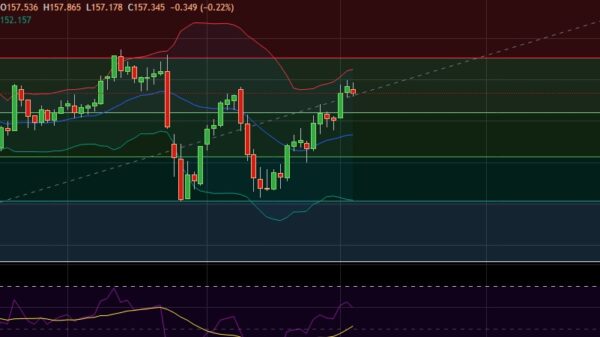


















A significant transformation in the market dynamics of Bitcoin has emerged, with recent analysis revealing that Exchange-Traded Funds (ETFs) have taken center stage as the primary influence on BTC price fluctuations. This shift marks a crucial transition from a landscape previously dominated by retail-driven on-chain activities to one increasingly reliant on institutional capital flows.
As reported in March 2025, this evolution alters not only the perceptions of analysts but also the strategies of investors engaging with cryptocurrency markets. Historically, the price discovery mechanism for Bitcoin was heavily tied to on-chain metrics such as active addresses, transaction volume, and miner activity. However, new data indicates that ETF fund inflows and outflows now exert a more substantial influence on price movements.
Jim Ferraioli, who serves as the Director of Cryptocurrency Research and Strategy at Charles Schwab, provided essential insights into this shift. He noted a consistent decline in on-chain activity since Bitcoin”s peak in October 2024. As traditional blockchain indicators have diminished in relevance, the market appears to be increasingly synchronized with movements of ETF capital.
This trend highlights the maturation of the cryptocurrency asset class. Data points to several factors supporting this narrative. Transaction fees are currently at multi-year lows, alleviating pressure on network congestion. Additionally, the trend of long-term holders selling has gained momentum, while exchange balances have reached new lows, suggesting that coins are being transferred into cold storage or ETF custodial accounts. Collectively, these factors enhance the price impact of ETF flows, creating a feedback loop where institutional products dictate short-term market momentum.
Understanding ETF-Driven Price Dynamics
To comprehend this new market dynamic, it is vital to analyze the mechanics of spot Bitcoin ETFs. Unlike their futures-based counterparts, spot ETFs hold actual Bitcoin. When investors acquire shares, the ETF issuer is required to purchase an equivalent amount of BTC from the open market, resulting in direct buy-side pressure. Conversely, share redemptions necessitate selling, which can also influence the market.
Since their inception, U.S. spot Bitcoin ETFs have amassed billions in assets under management, accounting for a substantial portion of daily trading volume. The transition to ETF-driven price action has several implications:
- Decoupling from traditional crypto metrics: The price may become less correlated with hash rate and new wallet creation.
- Increased correlation with traditional finance: ETF flows are likely to respond more significantly to macroeconomic factors such as interest rates and stock market performance.
- Enhanced market efficiency: Large, regulated funds can execute orders with minimal slippage.
- Reduced volatility from large holders: Institutional demand mitigates the impact of concentrated sell-offs by whales.
Expert Perspectives on Institutional Investments
Ferraioli”s insights carry weight due to his role within a major traditional finance institution. His assertion that “truly institutional investors have not yet fully entered the market” is particularly noteworthy. This observation suggests that the current ETF-driven activity may primarily involve financial advisors, wealth management platforms, and early-adopting institutions. The potential exists for a more significant influx of institutional capital, especially if supportive legislation emerges.
Adding another layer, Gerry O”Shea, Head of Global Market Analysis at crypto asset manager Hashdex, expressed optimism about future catalysts that could drive BTC prices higher. He pointed to possible shifts in U.S. monetary policy, such as interest rate reductions, or meaningful advancements in comprehensive cryptocurrency legislation as pivotal factors. Such changes are likely to influence price movements primarily through the ETF channel as institutions recalibrate their portfolio allocations in response to evolving regulatory and macroeconomic conditions.
Historical Context and Future Outlook
The emergence of ETFs as the dominant price driver has been a gradual process rather than an abrupt change. This evolution has resulted from a decade-long journey toward the financialization of digital assets. The launch of the first Bitcoin futures ETF in 2021, followed by the approval of multiple spot Bitcoin ETFs in early 2024, has provided a compliant and familiar vehicle for traditional financial capital. The subsequent accumulation of assets has reached a critical mass, making ETF flow data a more reliable leading indicator than many on-chain metrics.
Looking forward, this new paradigm presents both opportunities and challenges for traders and investors alike. Monitoring the daily net flows of significant ETFs such as IBIT (iShares), FBTC (Fidelity), and GBTC (Grayscale) will be essential. For long-term advocates, this trend reinforces the notion that Bitcoin is evolving into a mainstream macro asset, albeit one increasingly influenced by traditional market mechanics. While the decentralized ethos remains integral to the protocol”s design, the mechanisms of price discovery are now closely intertwined with institutional investment strategies.
The analysis concludes that Bitcoin ETFs now play a crucial role in driving BTC price action. This represents a monumental shift from a market once fueled by individual on-chain activity to one now guided by institutional fund flows. Although on-chain data continues to be relevant for evaluating the health and security of the network, its direct impact on short-term price dynamics appears to be diminishing. The future of Bitcoin increasingly hinges on factors influencing institutional capital allocation, including monetary policies, regulatory clarity, and traditional risk appetite, underscoring its ongoing integration into the global financial landscape.