













































The cryptocurrency market is witnessing a significant trend as Bitcoin exchange-traded funds (ETFs) experience substantial outflows. Between January 5 and January 9, 2026, net outflows from Bitcoin spot ETFs reached $681 million, indicating a growing sense of caution among retail investors despite relatively stable Bitcoin prices.
The deepening outflows were highlighted on January 9, when Bitcoin ETFs recorded redemptions of $249.99 million, marking the fourth consecutive day of such withdrawals. Over the same period, Ethereum spot ETFs reflected similar trends with net outflows totaling $68.57 million, despite initial momentum at the beginning of January.
During the recent sell-off, Bitcoin ETF redemptions accumulated to a staggering $1.38 billion. Data from January 6 to January 8 indicated daily outflows of $243.24 million, $486.08 million, and $398.95 million, respectively. Notably, BlackRock faced the largest outflow of approximately $251.97 million, while Fidelity”s FBTC managed to secure a modest inflow of $7.87 million.
Despite the current downturn, January initially began positively for Bitcoin ETFs, with inflows of $471.14 million on January 2 and $697.25 million on January 5, representing the highest one-day inflows since mid-December.
On the Ethereum front, January 9 marked the third consecutive day of outflows, with a cumulative total of $351.44 million withdrawn over three days. The total net assets for Ethereum ETFs dropped to $18.70 billion by January 9, down from $20.06 billion on January 5.
Interestingly, the market has not seen a complete withdrawal of capital from digital assets. On January 9, Solana spot ETFs maintained stability with zero outflows, while XRP products continued to attract attention, recording inflows of $4.93 million. From January 5 to January 9, Solana ETFs posted net inflows of $41.08 million, and XRP products registered $38.07 million in inflows, suggesting a selective rotation in investor preferences.
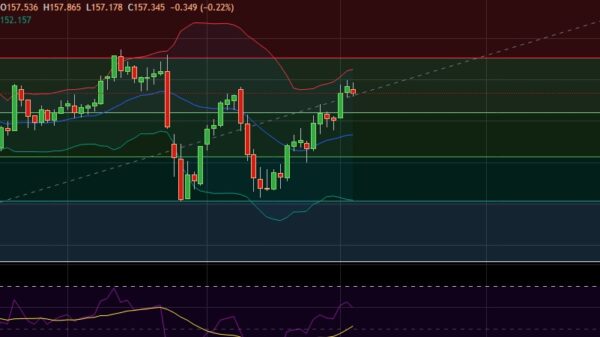
Even with Bitcoin”s price trading near recent highs, retail trading activity has dwindled as volatility increases. Sentiment indicators have shown growing fear among short-term holders. Historical patterns indicate that periods of price consolidation often occur after strong rallies, with retail investors opting to reduce their exposure.
As of January 9, the total net assets under management in Bitcoin ETFs fell to $116.86 billion, down from $123.52 billion on January 5. The cumulative net inflows for Bitcoin ETFs decreased to $56.40 billion, while daily trading volume declined to $2.97 billion. The IBIT from BlackRock remains the leading product with cumulative inflows of $62.41 billion, while FBTC follows with $11.72 billion. In contrast, Grayscale”s GBTC has faced cumulative net outflows of $25.41 billion since its conversion.
The contrasting dynamics of Bitcoin”s price resilience and the defensive stance of retail investors present a critical indicator for future trading patterns in the cryptocurrency market.