








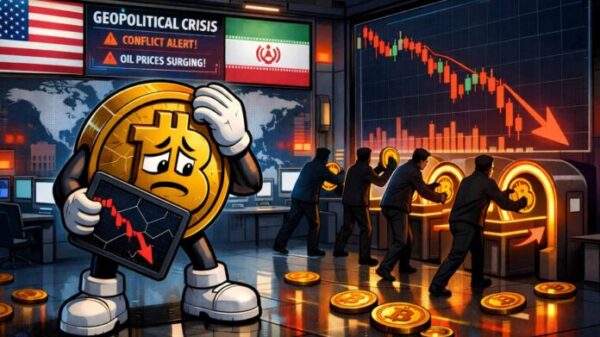













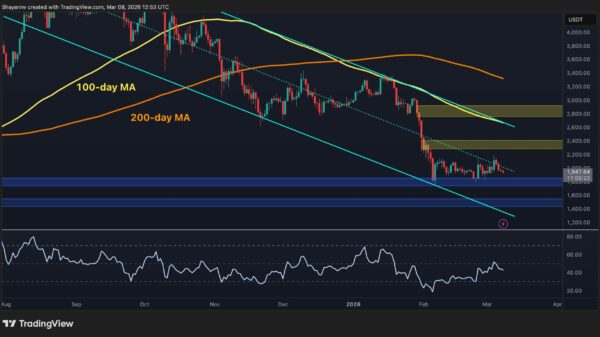





















Bitcoin has experienced a significant downturn, plunging below the $66,000 mark as geopolitical tensions escalate and oil prices soar. The latest market movements were particularly pronounced over the weekend, reflecting broader economic uncertainties.
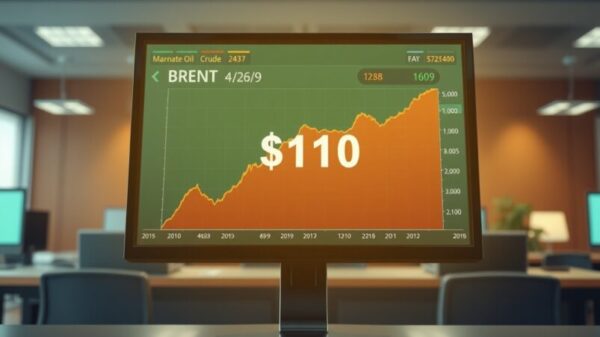
The current crisis is largely influenced by increasing tensions between the United States and Iran. These geopolitical conflicts have resulted in considerable volatility across multiple financial markets. As of Sunday evening, U.S. markets reacted sharply, with April WTI crude oil futures surging by an impressive 19.1%, reaching $108.35 per barrel. This marks a striking increase that has not been witnessed in nearly four years, effectively doubling prices since early 2026.
The impact of these rising oil prices has reverberated through global stock markets. U.S. stock index futures saw a decline of nearly 2%, while Japan”s Nikkei 225 index faced an even steeper drop of 3.1% as it approached the Monday trading session. This downturn in traditional markets has spilled over into the cryptocurrency sector.
In this turbulent environment, Bitcoin has mirrored the declines seen in traditional equities, experiencing a drop of approximately 2%. Alongside Bitcoin, other notable cryptocurrencies such as Ethereum (ETH) and Solana (SOL) also reported declines of around 1.4%. Investors are closely monitoring these fluctuations as they navigate the uncertain landscape.
Despite the recent price drops, analysts continue to discuss Bitcoin“s potential as an investment asset beyond mere survival in the current climate. The debate centers around its ability to evolve into a sovereign reserve asset, as institutional standards increasingly come into play. Currently, Bitcoin”s price movements correlate with major stock indices at a high level, although these equities represent only about one-quarter of Bitcoin”s overall price dynamics. This highlights Bitcoin”s distinct value, which is largely driven by decentralization and its growing user base, rather than solely dependent on central bank policies.