

























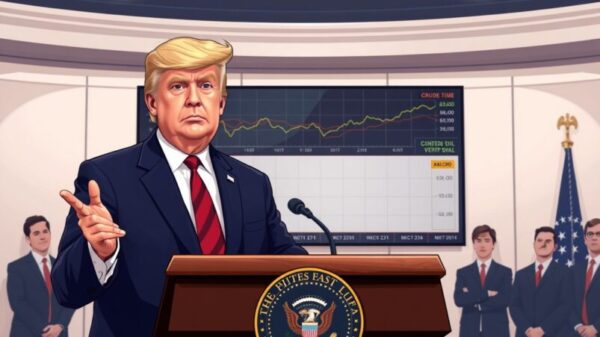









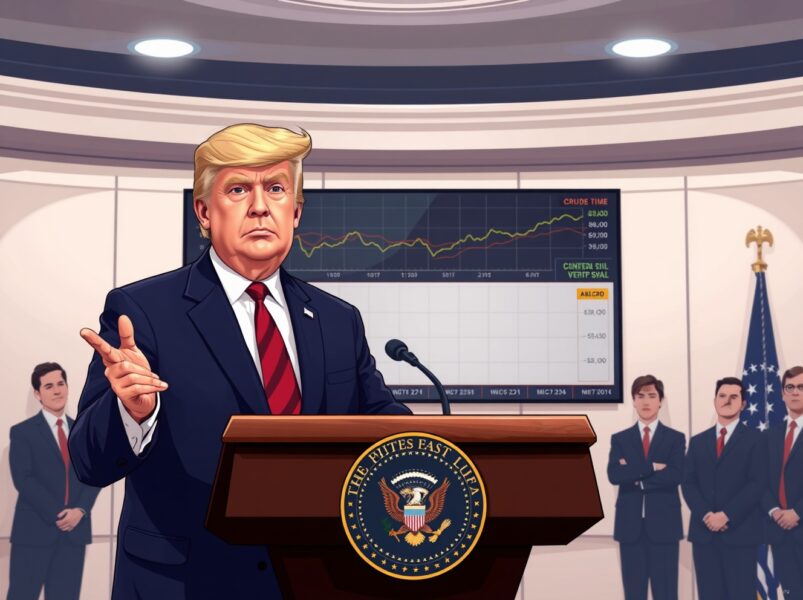
In a recent address focusing on national security, former President Donald Trump described potential oil price increases due to Middle East tensions as a “small price to pay.” This remark has sparked considerable debate among energy analysts, policymakers, and market observers, particularly as concerns about regional stability and global energy supply chains resurface.
During his foreign policy speech, Trump underscored the economic ramifications of taking a strong stance against Iranian aggression, referencing the historical volatility in oil markets during conflicts in the region. Analysts quickly noted that his comments coincided with rising tensions in the Strait of Hormuz, a crucial passage for global oil shipments, accounting for around 20% of the total according to the Energy Information Administration.
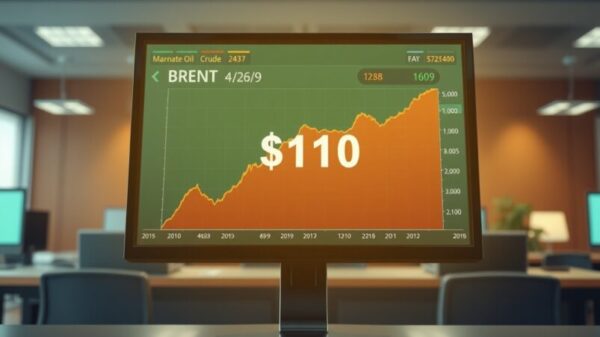
Energy markets have historically reacted sensitively to developments in the Middle East. For example, the Gulf War in 1990 saw prices soar by 160% within three months. Current assessments indicate that any significant conflict could lead to initial price hikes of 30-50%. However, the availability of strategic petroleum reserves and increased output from other regions could help mitigate long-term effects.
The historical patterns of conflict-induced oil shocks inform today”s market expectations. A review of notable Middle Eastern conflicts reveals trends in oil price reactions:
- Iran-Iraq War (1980): 135% increase over 8 months, with a supply disruption of 4.0 million barrels per day (bpd).
- First Gulf War (1990): 160% spike over 3 months, with a 4.3 million bpd supply disruption.
- Iraq Invasion (2003): 28% rise over 2 months, affecting 2.3 million bpd.
- Libyan Civil War (2011): 25% increase over 5 months, with 1.5 million bpd impacted.
These historic instances indicate that initial price surges can exceed 100% during major disruptions, though markets typically stabilize within 3-8 months through adaptive measures. Strategic reserves and increased production play critical roles in this stabilization, as do adjustments in consumer behavior, which often lead to reduced demand over extended high-price periods.
Dr. Elena Rodriguez, Director of Geopolitical Risk at the Global Energy Institute, provides valuable insights on the current energy landscape. She notes that today”s markets are more diversified, featuring increased U.S. shale production and significant strategic reserves among OECD nations. These factors create essential buffers against potential supply shocks.
Rodriguez highlights key differences from past crises, including U.S. oil production surpassing 13 million bpd, thereby lessening reliance on imports. Additionally, renewable energy now contributes 20% to U.S. electricity generation, further decreasing oil”s dominance. Enhanced energy efficiency and sophisticated international response mechanisms also characterize the current landscape.
Oil price volatility can have far-reaching consequences for global economies. Transportation costs rise, manufacturing expenses increase for petroleum-reliant sectors, and consumer spending shifts as fuel prices consume larger portions of household budgets. The International Monetary Fund indicates that a 10% increase in oil prices typically reduces global GDP growth by 0.2-0.3 percentage points, with emerging markets facing heightened fiscal pressures.
Countries maintain strategic petroleum reserves to manage supply emergencies. The U.S. Strategic Petroleum Reserve holds approximately 600 million barrels, while members of the International Energy Agency collectively control around 1.5 billion barrels. These reserves are crucial for addressing temporary supply shortages during conflicts, with coordinated releases helping to stabilize prices.
Current market adaptations demonstrate a more flexible energy landscape than in previous crises. U.S. shale producers can ramp up production by 1-2 million bpd within 6-12 months if needed, while Brazilian and Canadian oil sources continue to expand. These alternative supply options, alongside enhanced market mechanisms like futures trading and efficient inventory management, contribute to greater resilience during geopolitical disturbances.
In conclusion, Trump”s remarks about oil price increases being a “small price to pay” reflect the intricate balance between national security and economic stability. While historical trends show significant short-term volatility during conflicts, modern energy markets exhibit greater resilience through diversified supplies, strategic reserves, and adaptive mechanisms. As geopolitical dynamics unfold, market participants will remain vigilant, assessing the potential impacts on energy security and economic conditions in 2025.
FAQs
Q1: What specific oil price increase did Trump reference as a “small price to pay”?
A1: Trump did not specify exact percentage increases but alluded to historical patterns where conflicts caused temporary spikes of 30-100% in oil prices.
Q2: How have oil markets changed since previous Middle East conflicts?
A2: Current markets are characterized by greater supply diversity, increased U.S. shale production, larger strategic reserves, and more flexible refinery configurations.
Q3: What immediate effects would an Iran conflict have on global oil prices?
A3: Analysts predict initial price spikes of 30-50% if significant supply disruptions occur, depending on the scale of conflict and logistical responses.
Q4: How do strategic petroleum reserves mitigate oil price shocks?
A4: Coordinated releases from reserves can alleviate temporary shortages, providing critical supply coverage during emergencies.
Q5: What long-term impacts might Middle East tensions have on energy markets?
A5: Sustained tensions could elevate risk premiums in oil pricing and accelerate diversification towards alternative energy sources.