






























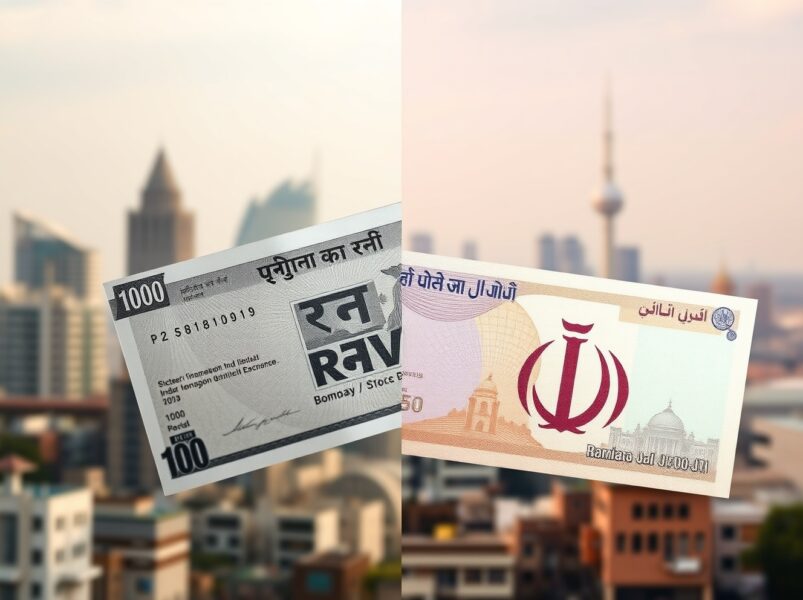
India”s economic expansion is facing substantial risks from increasing geopolitical tensions surrounding Iran, as highlighted by a recent analysis from Societe Generale. This French financial institution”s research indicates that potential disruptions in the Middle East could lead to a series of economic challenges for India, currently recognized as the world”s fastest-growing major economy.
The analysis comes at a time characterized by heightened global uncertainty and evolving energy dynamics that significantly affect India”s strategic stance. The report emphasizes that India”s economy, despite its impressive growth, remains vulnerable to external shocks, particularly those stemming from instability in Iran.
Energy Security and Economic Vulnerabilities
According to the findings, energy security is a critical concern due to India”s heavy reliance on imports for its crude oil needs. Approximately 85% of India”s crude oil is imported, making it particularly sensitive to disruptions in Middle Eastern supply chains. Historical data shows that previous instances of instability in the region have led to significant fluctuations in energy prices, adversely impacting the Indian economy.
In this context, the report identifies key maritime chokepoints that could be affected, including:
- The Strait of Hormuz: A vital passageway for around 20% of global oil shipments.
- The Persian Gulf: The primary shipping lane for crude exports from the Middle East.
- Arabian Sea routes: Essential for India”s energy imports and exports.
Modeling by Societe Generale suggests that a 20% surge in crude oil prices could increase India”s inflation rate by 40-60 basis points, likely compelling the Reserve Bank of India to adopt a tighter monetary policy stance for an extended period. The report references that India”s petroleum import bill escalated by 29% during the 2022 energy crisis, which significantly contributed to the expansion of the trade deficit.
Historical Context and Economic Comparisons
The analysis draws parallels with previous geopolitical events, such as the 2019 tensions in the Strait of Hormuz, which saw Brent crude prices spike by 15% in just one week. During that time, India”s current account deficit widened by approximately 0.3% of GDP. While the economy today has stronger foreign exchange reserves, which have increased to over $600 billion, public debt remains high at around 83% of GDP, constraining fiscal responses to potential crises.
Trade and Financial Market Implications
Beyond energy markets, Societe Generale”s analysis discusses various trade channels through which instability in Iran could impact India. The two nations share historical economic ties, and India”s strategic relationships with Iran could lead to vulnerabilities, particularly in sectors such as agricultural exports and pharmaceuticals.
Moreover, regional instability often triggers capital flight from emerging markets, putting additional pressure on the Indian rupee and increasing borrowing costs for businesses. The Reserve Bank of India faces the challenge of managing inflation while navigating these external shocks, which complicates policy decisions. Historical precedents show that aggressive tightening measures can lead to slowed GDP growth, as witnessed in 2022.
Mitigation Strategies and Future Outlook
In response to these geopolitical risks, India has undertaken several strategic initiatives. The country has diversified its energy sources, boosting imports from nations such as Russia and the United States while also ramping up renewable energy efforts. Furthermore, India has maintained an active diplomatic dialogue with regional stakeholders, including Iran and Saudi Arabia, which aims to preserve economic ties while addressing security concerns.
In conclusion, while Societe Generale”s analysis underscores the vulnerabilities faced by India”s economy amid rising geopolitical tensions associated with Iran, it also highlights the nation”s strengthened economic fundamentals and proactive mitigation strategies. The ongoing diversification and strategic diplomacy will be critical in managing these complex challenges while striving to maintain growth momentum.