








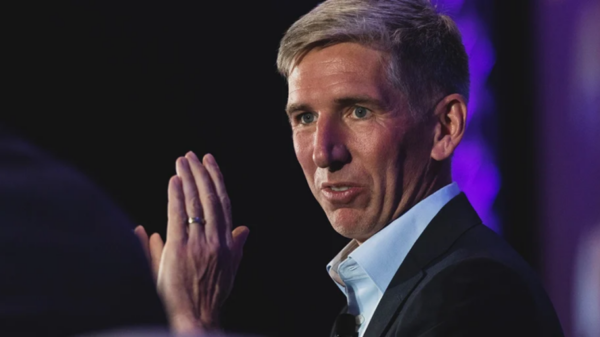

































In a noteworthy development, Austan Goolsbee, President of the Federal Reserve Bank of Chicago, has stirred discussions in financial circles by predicting an interest rate cut this year. His remarks come at a pivotal moment for U.S. monetary policy, suggesting a potential shift in approach.
During a recent economic forum, Goolsbee, a voting member of the Federal Open Market Committee (FOMC) for 2025, expressed that current inflation trends and labor market conditions may warrant a policy easing. This revelation prompted investors to reassess their expectations regarding the timing of the initial rate reduction.
Goolsbee”s insights are particularly significant given his leadership role within one of the twelve regional Federal Reserve Banks, coupled with his background as an economics professor which informs his analytical and data-driven communications. His anticipation for a rate cut does not exist in isolation; it follows a prolonged period of aggressive monetary tightening aimed at controlling inflation, which has surged to its highest levels in decades.
The Federal Reserve”s benchmark federal funds rate currently stands at a restrictive level intended to curb economic activity. However, recent data indicates a moderation in key inflation metrics, such as the Personal Consumption Expenditures (PCE) index, leading policymakers like Goolsbee to consider when to transition from a restrictive to a supportive monetary stance.
Goolsbee emphasized the necessity of a data-dependent approach, indicating that any potential policy shift hinges on forthcoming economic indicators. The Fed”s dual mandate of maintaining price stability while ensuring maximum employment guides its decisions. Therefore, officials require strong evidence that inflation is sustainably moving towards their 2% target, alongside a stable labor market.
Key indicators that the Fed is monitoring include core PCE inflation, which excludes volatile food and energy prices, and the Employment Cost Index, which measures wage growth. These indicators are crucial in determining the timing for any potential rate cuts.
While Goolsbee”s outlook signals a possible easing of monetary policy, it is essential to recognize that his perspective is one among many within the FOMC. The committee includes a diverse group of members, and differing viewpoints exist regarding the appropriate path forward. Some members, often referred to as “hawks,” advocate for a cautious approach focused on inflation risks, while others, including Goolsbee, adopt a more dovish stance, prioritizing employment and economic growth.
This ongoing internal debate is vital to the Fed”s decision-making process, as regional economic conditions vary widely across the country. Goolsbee”s Chicago district represents a diverse economic landscape, incorporating data from various sectors, which likely influences his perspective.
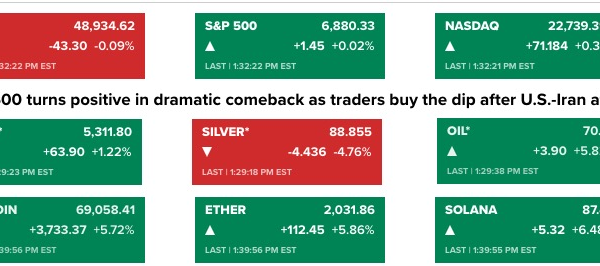
The anticipation surrounding a Federal Reserve rate cut carries significant implications for both financial markets and the broader economy. Typically, financial markets begin pricing in policy changes well in advance, meaning Goolsbee”s statements could impact bond yields, the value of the U.S. dollar, and stock valuations.
For everyday Americans, a rate cut cycle would lead to lower borrowing costs for mortgages, auto loans, and business financing. However, savers may experience reduced returns on savings accounts as interest rates decline. The overarching goal remains to achieve a “soft landing,” minimizing inflation without triggering a recession, and Goolsbee”s optimism hints at a more favorable economic outlook.
In conclusion, Goolsbee”s expectation for a Federal Reserve rate cut this year marks a critical moment in the evolution of post-pandemic monetary policy. His emphasis on a data-driven approach underscores the need for careful consideration of incoming economic data before any definitive policy changes are made. The journey from a phase of aggressive tightening to a more accommodating stance is intricate and will rely heavily on ongoing assessments of inflation and employment data.
As businesses strategize for investments and families contemplate significant purchases, Goolsbee”s perspective offers a cautious yet hopeful glimpse into the potential for financial relief in the near future.