























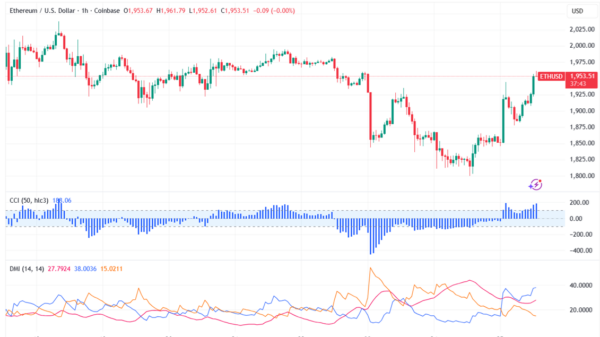






















The EUR/USD currency pair encounters significant obstacles as the European Central Bank (ECB) and the Federal Reserve maintain diverging monetary policies, limiting potential upward movement. This analysis, based on insights from OCBC Bank, highlights the technical and fundamental factors influencing the currency pair”s performance in March 2025.
Currently, the EUR/USD is trading within a well-defined range, with resistance levels hindering sustained bullish trends despite occasional rallies. Technical charts provided by OCBC Bank indicate key resistance at 1.0950, with support situated at 1.0750, creating a trading corridor of 200 pips that has persisted for six weeks. Moving averages are demonstrating convergence patterns, suggesting an impending increase in volatility. The relative strength index remains stable between 40 and 60, indicating a lack of clear momentum in either direction.
The ECB”s cautious stance on monetary policy normalization, despite a recent moderation in inflation, poses fundamental challenges. ECB President Christine Lagarde underscored the importance of data dependency in the March policy meeting, warning against premature adjustments that could jeopardize price stability. The central bank is expected to implement only gradual rate reductions throughout 2025, forecasting a total decline of 75 basis points in the deposit facility rate.
In contrast, the Federal Reserve is signaling a more aggressive approach to policy easing, with projections of 100 basis points in rate cuts this year. This divergence in policy creates yield differentials that traditionally favor the U.S. dollar over the euro. Historical trends indicate that similar periods of policy divergence have led to an average depreciation of EUR/USD by 8.7% over six-month spans.
Economic growth disparities further exacerbate the challenges for EUR/USD. The Eurozone”s GDP growth forecast for 2025 ranges from 0.8% to 1.2%, significantly lagging behind the United States” projected growth of 2.1% to 2.5%. Manufacturing PMI data indicates ongoing contraction in the Eurozone, especially in Germany, where the manufacturing sector is grappling with costs associated with the energy transition and global trade adjustments. Meanwhile, the U.S. service sector continues to thrive, bolstered by robust consumer spending and business investment.
Inflation trends in both regions are also impacting central bank policies. The Eurozone”s headline inflation fell to 2.1% in February 2025, nearing the ECB”s target, but persistent services inflation at 3.8% complicates the normalization timeline. Conversely, the U.S. has shown more rapid progress with core PCE declining to 2.3% in January 2025, allowing the Federal Reserve greater flexibility for policy adjustments.
Geopolitical factors add another layer of complexity to EUR/USD dynamics. The euro typically acts as a funding currency during risk-off periods, facing depreciation amid rising global uncertainty. Recent geopolitical tensions, particularly in Eastern Europe and the Middle East, have increased capital flows toward the U.S. dollar. Additionally, the implementation of EU fiscal rules raises concerns about budget trajectories for member states, potentially affecting sovereign risk perceptions.
Market positioning data reveals net short positions on the euro against the U.S. dollar among institutional investors. Hedge funds and asset managers have raised their euro short positions by 18% in February 2025, reaching a level not seen since September 2024. While this positioning may create opportunities for short-covering rallies if positive data from the Eurozone emerges, the prevailing sentiment remains cautious. Retail trader surveys indicate mixed expectations, with 54% of respondents forecasting a decline in EUR/USD in the upcoming quarter.
Historical patterns of previous policy divergence periods provide context for the current situation. For example, during the 2014-2015 period, the Federal Reserve began tightening while the ECB expanded stimulus, leading to a drop in EUR/USD from 1.40 to 1.05 over 18 months. Although the current conditions are different due to simultaneous easing plans, the timing and magnitude differences still create relative valuation pressures.
In conclusion, the EUR/USD currency pair is experiencing significant constraints on its upside potential due to the contrasting monetary policies of the ECB and the Federal Reserve. Technical analysis identifies clear resistance levels, while fundamental factors such as economic growth disparities and inflation trajectories contribute to persistent headwinds. Market sentiment and positioning reflect a cautious outlook for euro appreciation. For sustained bullish momentum, developments such as accelerated ECB tightening, delayed Fed easing, or improved growth prospects in the Eurozone would be required—conditions not currently anticipated by market participants.