






































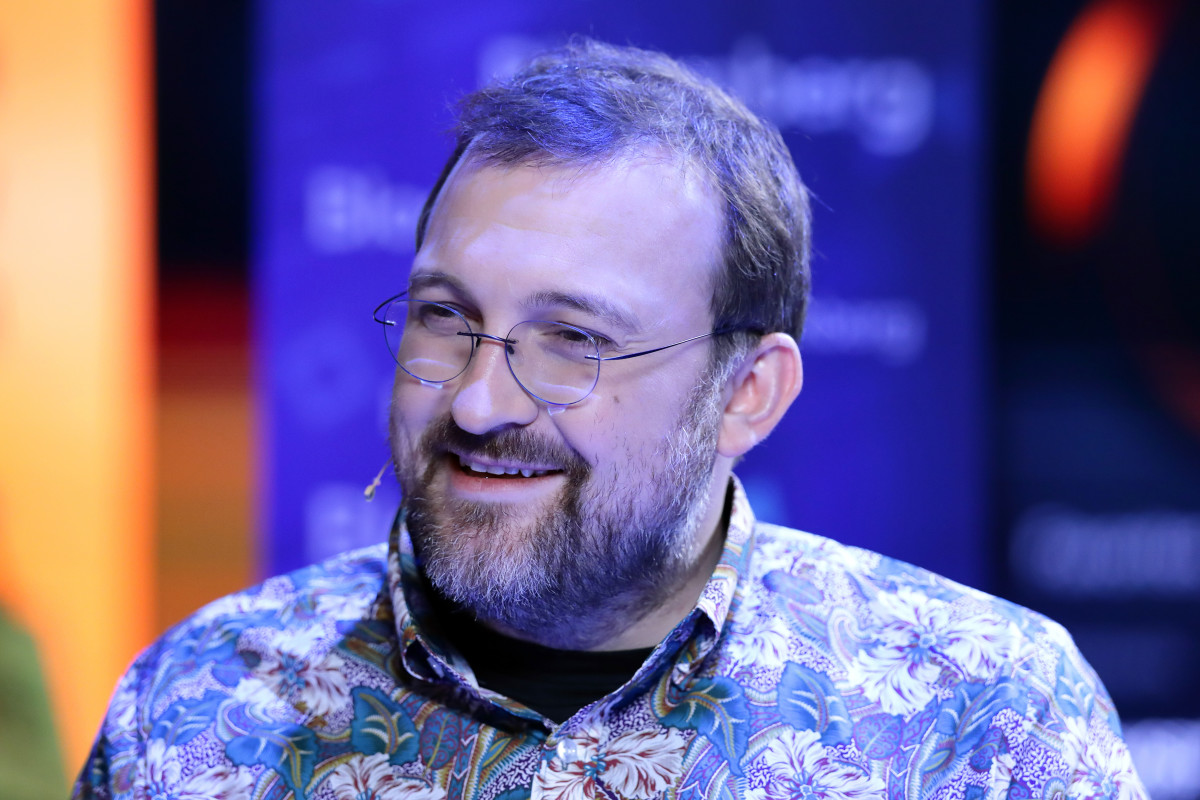
The founder of Cardano, Charles Hoskinson, recently highlighted the current challenges facing the cryptocurrency sector, drawing a stark comparison to Japan in 1946, after World War II. He emphasized that the crypto industry is currently experiencing significant turmoil, much like a nation recovering from devastating bombings.
In a discussion with The Wolf of All Streets host Scott Melker, Hoskinson characterized the crypto landscape as being “carpet nuked,” reflecting the severe setbacks the industry has faced amid market crashes, regulatory scrutiny, and the fallout from failed projects like FTX and Terra-Luna.
Despite these challenges, Hoskinson remains optimistic about the future. He noted that while the industry has endured what he describes as an “extended trauma” since 2022, there is a quiet yet crucial groundwork being laid for the next evolution of cryptocurrency. He pointed to the advancements in technology, such as zero-knowledge (ZK) proofs, and the significant upgrades rolled out by both Ethereum and Cardano.
However, the lack of regulatory clarity has created a “bifurcated recovery,” with institutional adoption driving Bitcoin forward while many altcoins remain stagnant and overlooked. “It”s now an institutional asset, it”s not a Web3 asset anymore,” he asserted, highlighting the shift in how cryptocurrencies are perceived and utilized.
Looking ahead, Hoskinson predicts that 2026 will serve as a “reset” for the industry. He drew parallels between the current landscape and earlier pivotal moments in crypto history, suggesting that the next phase will usher in the “fourth generation” of technology. This new era will be defined by three key breakthroughs: rational privacy, smart compliance, and chain abstraction.
By 2030, Hoskinson estimates that 90% of transactions on decentralized exchanges (DEXs) and 60% of decentralized finance (DeFi) activity will occur through intent-based systems, simplifying the user experience. He explains that this approach will allow users to express their intent—such as exchanging BTC for ETH—without needing to navigate complex transaction processes.
As these advancements unfold, Hoskinson anticipates a significant increase in the total addressable market for cryptocurrencies, projecting a potential surge in assets under management (AUM) as programmable privacy and identity solutions integrate into blockchain infrastructure. This convergence of decentralized finance (DeFi) and traditional finance (TradFi) could lead to a transformative increase in user engagement within the crypto ecosystem.
In conclusion, while the path forward may seem daunting, Hoskinson”s vision for the evolution of cryptocurrency offers a hopeful outlook for both seasoned investors and newcomers alike, indicating that the industry is on the brink of a substantial transformation.