





































The ongoing discussion about the future of cryptocurrency has taken a significant turn as analyst Jake Claver posits that XRP may soon overtake Bitcoin as the leading digital asset. In his latest analysis, part of the “XRP Domino Theory” series, Claver highlights how an impending global financial crisis could compel markets to adopt instant settlement solutions, which he describes as “the largest wealth transfer in our lifetimes.”
Claver points to escalating geopolitical tensions involving nations like Iran, Venezuela, China, and Russia, suggesting that a drastic increase in oil prices—ranging from 20% to 40%—could dismantle the Japanese yen carry trade. This trading strategy has seen trillions of dollars borrowed in yen over the past thirty years, subsequently invested in treasuries, stocks, and cryptocurrencies. As Japanese bond rates reach their highest levels in three decades, the potential for a carry trade unwind looms large.
Japan”s holding of approximately $1.6 trillion in U.S. treasuries, coupled with the BRICS nations” additional $2.3 trillion, creates a precarious situation. According to Claver, when the carry trade collapses, investors will likely liquidate various assets to secure their investments in what they perceive to be safer options, such as Japanese bonds.
Additionally, Claver raises concerns about Tether, whose market capitalization currently stands at $190 billion. However, only $135 billion of this is backed by U.S. treasuries, with the remainder comprising roughly 100,000 BTC, over 100 metric tons of gold, and private credit. Claver warns that a global margin call could lead to a significant decline in these assets, potentially by 20% to 50%, thereby straining Tether”s market peg. Since many crypto exchanges rely heavily on Tether for liquidity, any slip could thin order books and slow down withdrawals.
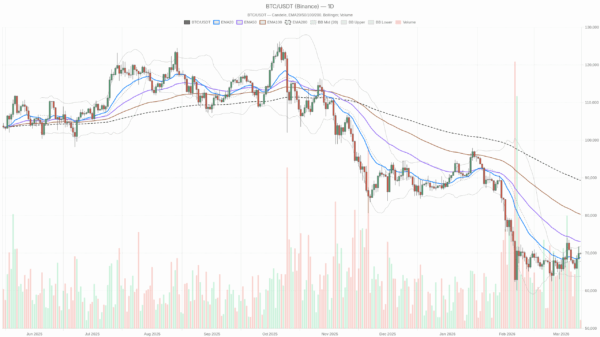
In a potential market panic, Claver anticipates that entities like MicroStrategy and various Bitcoin ETFs may be forced to sell their holdings. Institutional redemptions could trigger authorized participants to offload underlying BTC, creating a negative feedback loop that could see Bitcoin plummet to as low as $20,000.
What sets XRP apart, according to Claver, is its transaction speed, which allows for settlements within just 3 to 5 seconds. This rapid processing becomes increasingly vital as counterparty risks escalate. Claver estimates the available supply of XRP could be as low as 100 million tokens, and with merely $200 million in buying pressure, the market could easily exhaust this supply, leading to a sharp price increase as holders reconsider their selling positions.
If the anticipated financial crisis unfolds as Claver predicts, XRP”s role in the global financial ecosystem could undergo a transformative shift by the end of the year.