










































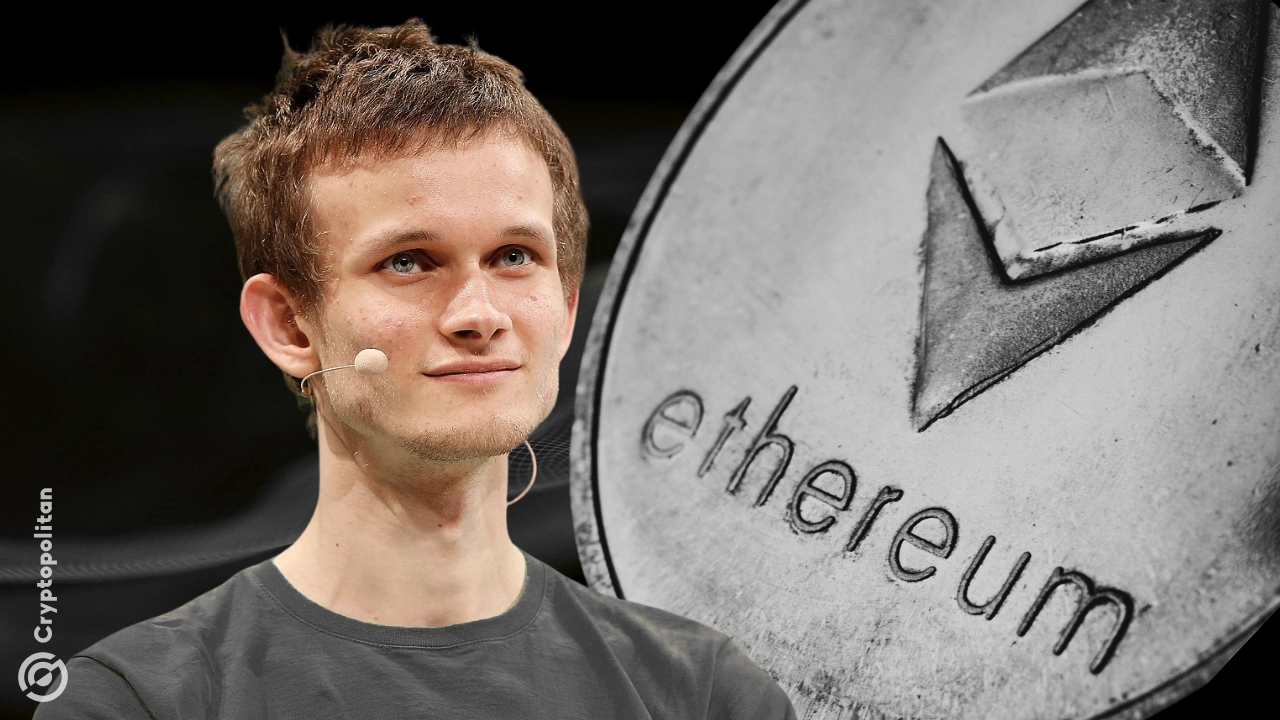
In a bold announcement, Vitalik Buterin, co-founder of Ethereum, has stated that 2026 will mark a pivotal year for the network as it aims to reverse a decade of decline in privacy, decentralization, and self-sovereignty. This declaration, shared on the social media platform X (formerly Twitter), emphasizes a renewed commitment from the Ethereum community to restore user autonomy and trustlessness that have diminished over the years due to compromises made for mainstream adoption.
Buterin articulated that “2026 is the year that we take back lost ground in terms of self-sovereignty and trustlessness,” highlighting a shift towards empowering users and reducing reliance on third-party intermediaries. He acknowledged, however, that achieving these ambitious goals will not occur overnight, with not all objectives expected to be met in the upcoming Kohaku release or subsequent hard forks. Still, he believes that the gradual advancements will position Ethereum to play a significantly more impactful role within the wider blockchain ecosystem.
Over the past few years, developers within the Ethereum community have been laying the groundwork for these critical improvements. Earlier this year, Buterin noted that the ZK-EVM had reached alpha status and met crucial production-level benchmarks while focusing on enhancing security. In his recent commentary, he outlined plans for a network infrastructure that will permit users to operate nodes independently and verify the blockchain using ZK-EVM and BAL. This move aims to transition users away from default reliance on remote procedure calls (RPCs) and encourage them to actively validate the data they receive.
To further enhance user experience, Buterin proposed the introduction of social recovery wallets and timelocks. These innovations are designed to mitigate the risk of losing assets in the event of a lost seed phrase. His advocacy for social recovery wallets dates back to at least 2021, with initial concepts taking shape during the launch of EIP-7702 as part of Ethereum”s Pectra upgrade.
Recently, Buterin has also amplified calls for prioritizing privacy at both the user and protocol levels. He expressed a vision where privacy-centric designs enable users to make private transactions as seamlessly as standard ones. The Ethereum Foundation has responded to this call by refocusing efforts on privacy initiatives, including the development of the Kohaku wallet framework and advancements such as ERC-4337 and FOCIL, aimed at bolstering resistance to censorship.
In a recent post, Buterin highlighted the necessity for users to access decentralized applications (dapps) without dependence on potentially unreliable servers. He also raised alarms about the pressing need for quantum-resistant cryptography to ensure long-term security, cautioning against deferring such measures for efficiency”s sake. He emphasized that Ethereum must be prepared to endure the “walkaway test,” reaffirming its role as a platform for trust-minimized applications.
Moreover, he outlined key objectives for Ethereum”s future, including achieving comprehensive quantum security, building a scalable framework for ZK-EVM and PeerDAS, maintaining a sustainable state model, and creating a censorship-resistant method for block-building. Buterin concluded by stressing the importance of completing these foundational enhancements to secure Ethereum”s technological and community resilience in the coming years.
He remarked, “Being able to say “Ethereum”s protocol, as it stands today, is cryptographically safe for a hundred years” is something we should strive to get to as soon as possible.” This conviction underscores the need for Ethereum to prioritize decentralization and resilience over mere efficiency and convenience.