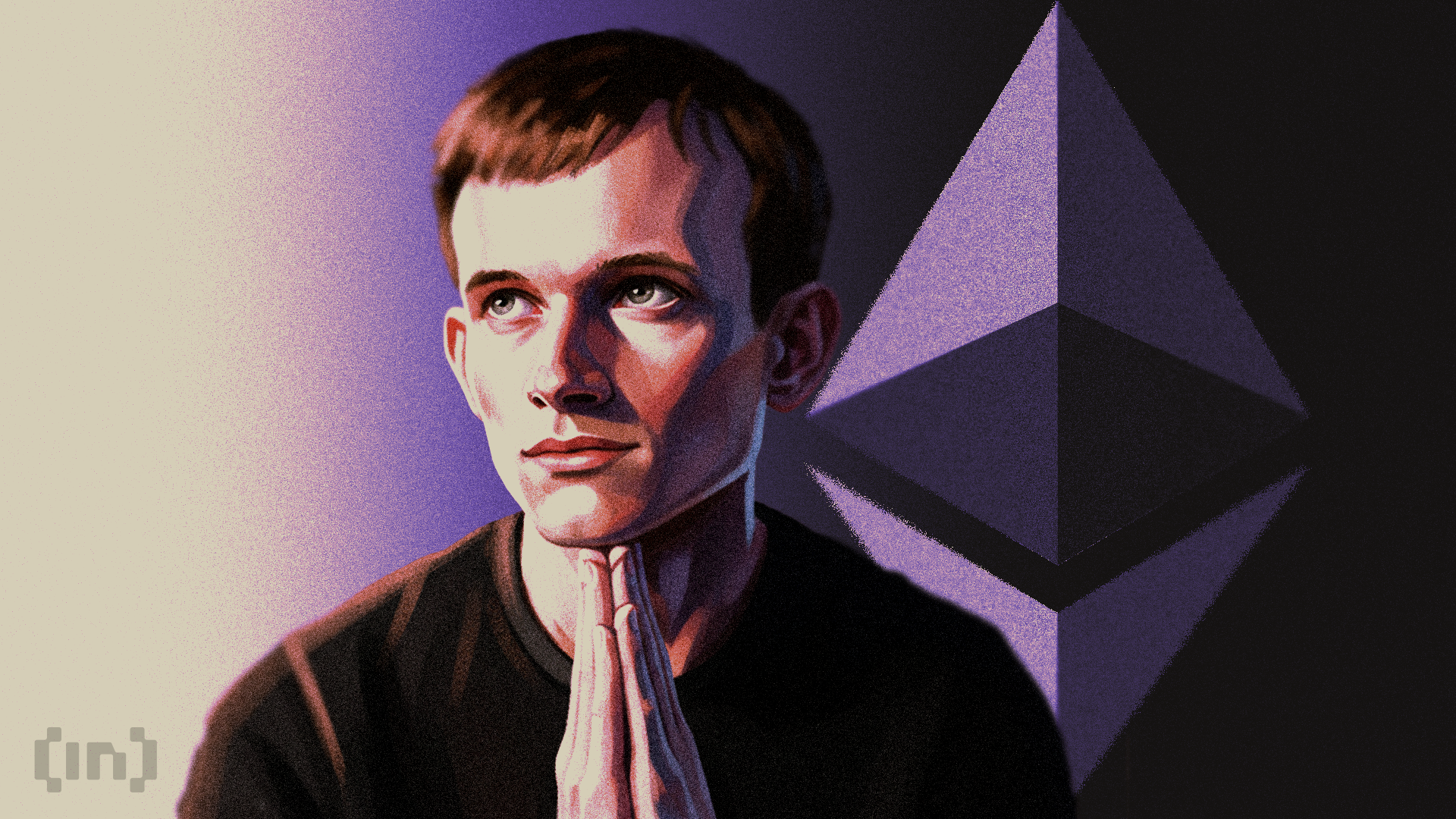
Vitalik Buterin, co-founder of Ethereum, has raised concerns regarding the recent decline in Layer 2 (L2) network usage, which has plummeted by 50%. User numbers have dropped from 58.4 million to approximately 30 million, while the base Ethereum network has witnessed a remarkable surge, doubling its active addresses.
This shift in user behavior indicates a growing preference for Ethereum”s primary network, which has demonstrated unexpected resilience. With transaction fees reaching historic lows and anticipated increases in gas limits through 2026, the base layer is now capable of handling a greater volume of transactions independently.
In a comprehensive analysis, Buterin highlighted that the initial vision for Layer 2 solutions may be outdated. Originally, L2s were designed to function as “branded shards” to alleviate scalability limitations of Ethereum”s mainnet. However, as the Layer 1 network now processes transactions at minimal costs, the necessity for Layer 2 solutions as cost-saving measures has diminished.
Data from TokenTerminal reveals a significant drop in monthly Layer 2 addresses, which fell from 58.4 million in mid-2025 to around 30 million by February 2026. Conversely, Ethereum”s main network gained traction, with active addresses increasing from 7 million to 15 million, marking a 41.4% rise. This reversal suggests that users are increasingly gravitating back to the main chain as transaction fees decline.
Buterin noted that some L2 operators have acknowledged they may not pursue stage 2 rollup status, instead opting to focus on regulatory compliance that requires greater control over the network. This approach stands in stark contrast to the foundational principles of permissionlessness and trustlessness that underpin Ethereum.
The market has reacted to this identity challenge with caution, with leading Layer 2 tokens experiencing declines ranging from 15% to 30% as of January 2026, according to data from CoinGecko. The total market capitalization for this sector now sits at $7.95 billion as of February 4, 2026, reflecting ongoing market apprehension.
Prominent tokens such as Arbitrum ($0.13211), ZKsync ($0.02327), and Optimism ($0.2192) exhibit mixed performance, concealing a more profound issue. As the accessibility of Ethereum”s Layer 1 improves, many users are opting for its enhanced security, rendering the primary function of Layer 2 networks as cost savers increasingly irrelevant.
Behavioral patterns indicate that when transaction costs decrease, users favor the main chain, contradicting earlier expectations that Layer 2 would dominate daily transactions. Security and simplicity on the Layer 1 are becoming increasingly prioritized as barriers continue to diminish.
Buterin”s recommendations for revitalizing Layer 2 networks involve identifying new value propositions beyond mere scaling. He suggests exploring avenues such as privacy-centric virtual machines, application-specific use cases, or even novel solutions for non-financial platforms like social networks and identity systems.
“What would I do today if I were an L2? Identify a value add other than “scaling”. Examples: non-EVM specialized features/VMs around privacy, efficiency specialized around a particular application, truly extreme levels of scaling that even a greatly expanded L1 will not do, a totally different design for non-financial applications, eg. social, identity, AI,” Buterin explained.
He emphasizes that Layer 2 networks managing ETH or other Ethereum-based assets must attain at least stage 1 security. Without this, they risk becoming isolated blockchains reliant on bridge connections, thereby losing their role as extensions of Ethereum. Buterin also advocates for robust interoperability, although specifics would depend on the network structure.
A native rollup precompile is deemed essential infrastructure by Buterin. This tool would enable Ethereum to directly verify ZK-EVM proofs, keeping pace with protocol modifications and providing hard-fork protection. It would empower Layer 2s to craft tailored solutions while still depending on Ethereum”s secure verification layer.
This adaptable vision accommodates a variety of Layer 2 models. Networks with EVM extensions can leverage the precompile for standard transactions while generating unique proofs for enhanced features. Such modularity facilitates trustless interaction with Ethereum while allowing for some centralized governance. Buterin notes that this flexibility is a core aspect of a developer”s choice within a permissionless framework.
As Ethereum”s base layer continues to expand through 2026, Layer 2 networks find themselves at a crucial crossroads. Data confirms that users are opting for mainnet security when it is available. Therefore, Layer 2s must now present compelling reasons for user engagement that extend beyond simply reducing costs. The solution may lie in advanced privacy solutions, innovative virtual machines, or unique applications, with the chosen direction of Layer 2s likely to shape the future landscape of Ethereum.