



























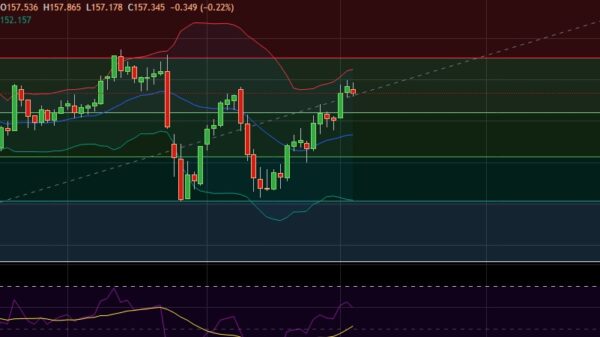


















In a notable development for the digital asset market, U.S. spot Ethereum exchange-traded funds (ETFs) experienced a significant turnaround on January 12, 2025. According to data from TraderT, these investment vehicles saw a net inflow of $5.27 million, marking the first positive day following four consecutive trading days characterized by net redemptions. This shift could indicate a recalibration of investor sentiment towards Ethereum, the second-largest cryptocurrency by market capitalization.
Analysis of ETF Flows
While the overall net inflow figure presents a promising picture, it conceals a stark contrast in performance among leading fund issuers. For instance, Grayscale”s flagship Ethereum Trust (ETHE) led the inflows with a remarkable single-day gain of $50.67 million. Additionally, Grayscale Mini ETH, a lower-fee product, attracted $29.28 million. In contrast, BlackRock”s iShares Ethereum Trust (ETHA) faced a significant outflow of $79.65 million, while the 21Shares Core Ethereum ETF (CETH) saw a modest inflow of $4.97 million. This competitive landscape underscores how fee structures and brand reputation influence capital distribution.
Understanding Market Dynamics
The introduction of U.S. spot Ethereum ETFs in late 2024 marked a significant regulatory milestone, following the earlier approval of Bitcoin ETFs. These funds allow traditional investors to gain regulated exposure to Ethereum”s price movements without needing to hold the asset directly. Consequently, the daily flow data from these ETFs has become an essential indicator of both institutional and retail investor sentiment. The four-day outflow prior to January 12 raised concerns regarding potential profit-taking and short-term volatility, making this reversal closely monitored for insights into medium-term trends in the crypto market.
Implications for Ethereum and the Broader Market
The return of net inflows into spot Ethereum ETFs could have far-reaching consequences beyond the funds themselves. Sustained inflows generate mechanical buying pressure on the underlying Ethereum market, as authorized participants need to acquire ETH to support new shares. Although the $5.27 million figure is relatively modest, continued trends in this direction may provide price support for Ethereum. Furthermore, positive flow data tends to enhance overall market sentiment, which can lead to reduced volatility and reinforces the investment thesis for Ethereum as a core institutional-grade asset, similar to Bitcoin.
Conclusion: A Shift in Investor Behavior
The net inflow recorded on January 12 into U.S. spot Ethereum ETFs is a critical indication of changing investor appetite. Ending a four-day streak of outflows, this headline figure tells a deeper story of intense competition among issuers, with Grayscale notably attracting significant capital while BlackRock experienced outflows. This trend reveals the maturation of the cryptocurrency ETF market, where decisions are increasingly driven by cost efficiency and product structure. Observers will be keen to see if this inflow trend continues, as it will serve as a key metric in assessing institutional confidence in the evolving digital asset landscape.
Frequently Asked Questions
Q1: What does a “net inflow” mean for a spot Ethereum ETF?
A net inflow occurs when the total value of money entering the ETF through new share purchases exceeds the value of money leaving through share redemptions on a given day. This typically requires the ETF issuer to buy more of the underlying asset, Ethereum.
Q2: Why did BlackRock”s ETHA have an outflow while Grayscale”s products had inflows?
Key factors likely include differences in management fees, investor reallocation strategies, and the specific client bases of each issuer. Investors may be moving capital to lower-cost options like Grayscale Mini ETH.
Q3: How do spot Ethereum ETF flows affect the price of ETH?
Sustained net inflows force market makers to purchase Ethereum on the open market to create new ETF shares, which can create upward price pressure. Outflows have the opposite effect, as Ethereum is sold to fund redemptions.
Q4: What is the significance of this being the first inflow in four trading days?
It suggests a potential pause or reversal in a short-term trend of investor withdrawals, which market analysts interpret as a possible stabilization or renewal of confidence in Ethereum”s near-term prospects.
Q5: Where does the flow data for these ETFs come from?
The data is compiled and published by independent analytics firms like TraderT, which aggregate publicly available information from exchanges and issuers to estimate daily fund flows.