



















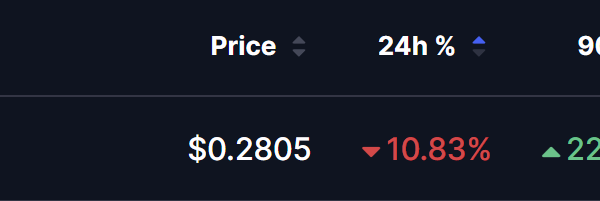
























Solana (SOL), currently ranked as the seventh largest cryptocurrency by market capitalization, experienced a decline of 1.40% over the last 24 hours, bringing its price to $84, as per data from CoinMarketCap. After a positive start to the week with three consecutive days of gains, Solana has now entered a downward trend, marking its third consecutive day of losses since March 4.
The cryptocurrency reached a low of $83.67 early on Saturday, influenced by a broader market downturn attributed to a stronger dollar index. The dollar recorded its most significant weekly increase in a year, presenting a substantial challenge for cryptocurrencies. Furthermore, the U.S. job market showed signs of weakness in February, with a reported loss of 92,000 jobs, a stark contrast to economists” expectations of an addition of 59,000 new jobs. This situation has reignited discussions regarding potential Federal Reserve rate cuts within the first half of 2026.
Market sentiment continues to be cautious, with the Crypto Fear and Greed Index currently indicating fear at a level of 20, although it reflects a recovery from the extreme fear observed in previous weeks. Since February 7, Solana has largely traded within a range of $75 to $95, signifying an ongoing battle between bullish and bearish market forces.
The current trading range is noteworthy due to the presence of two liquidity clusters. According to crypto analyst Ted Pillows, Solana is currently exhibiting two distinct liquidity zones. On the upside, a smaller liquidity cluster can be found around the $95 mark, while a more substantial cluster resides within the $78 to $85 range on the downside. Pillows suggests that a potential sweep of the downside liquidity may occur in the upcoming sessions, which could precede a rally.
Additionally, Solana”s total payment volume (TPV) growth is significantly outpacing both its peers and established fintech giants, boasting an impressive year-over-year increase of 755.3%. In a noteworthy development, Western Union is set to issue a new stablecoin on the Solana network, transitioning its treasury operations to the blockchain and granting access to over 500,000 retail agents for Solana applications. The anticipated launch of the USDPT token in 2026 aims to alleviate the “working capital trap” associated with pre-funded accounts and reduce average international transfer costs.