








































Litecoin is currently navigating a challenging market landscape as it prepares for the launch of its LitVM smart contracts. Despite the anticipated rollout of an Ethereum-compatible testnet in Q1 2026, Litecoin is trading at $81.17, reflecting a 35% decline from the previous year. This downturn occurs amid a backdrop of significant Bitcoin dominance, which stands at 59%, effectively suppressing Litecoin”s price and overall market activity.
The recent approval of a spot Litecoin ETF from Canary Capital failed to generate any inbound investment, with zero inflows reported over a five-day period. This highlights a lack of institutional interest in Litecoin, contrasting sharply with the reception of Bitcoin and Ethereum ETFs, which have successfully attracted significant capital. The ETF”s automatic approval by regulators indicates a recognition of Litecoin”s maturity in the market, yet it raises questions about why institutions are not compelled to invest.
Despite the underwhelming response to the ETF, several developments signal potential growth for Litecoin. Notably, corporate treasuries have allocated $183 million towards Litecoin-related initiatives, with Lite Strategy and Luxxfolio each making substantial investments. The network”s hashrate has reached an all-time high of 3.34 PH/s, underscoring a robust mining ecosystem, while transaction volumes also indicate increased activity.
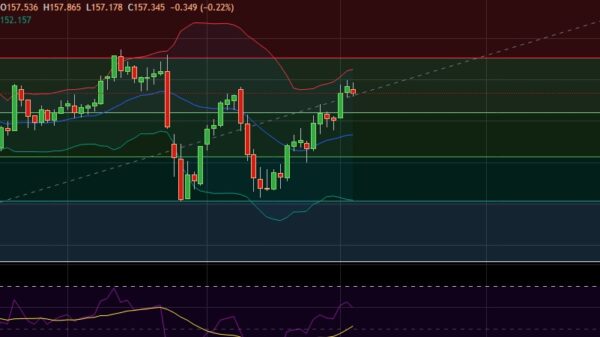
From a technical perspective, Litecoin is experiencing a phase of consolidation, currently positioned near the exponential moving averages (EMAs) at $80.62, $82.93, $88.48, and $93.48. The Supertrend indicator suggests resistance at $86.99. For upward movement, bulls need to overcome these resistance levels with substantial trading volume. A breakout above $100 could pave the way for targets of $110-$120, while a failure to maintain support could lead to a drop towards $75 or even $70.
The impending launch of the LitVM testnet introduces an EVM-compatible Layer-2 solution, allowing developers to create Ethereum-style decentralized finance (DeFi) applications and non-fungible tokens (NFTs) using native LTC. This initiative aims to attract developers by leveraging familiar coding frameworks without requiring significant adjustments to the Litecoin base layer. However, the critical challenge remains whether developers will choose to build on Litecoin given the competitive advantages offered by more established platforms.
In conclusion, while Litecoin possesses strong fundamentals and technical capabilities, the current market sentiment and the overwhelming dominance of Bitcoin present significant hurdles. The upcoming LitVM launch could provide a much-needed boost, but for Litecoin to achieve meaningful price appreciation, a broader market shift away from Bitcoin and towards altcoins is essential.