








































Ethereum is undergoing significant upgrades aimed at bolstering its position as a leading blockchain platform. These enhancements, which focus on security, scalability, and censorship resistance, are a strategic response to the competitive pressures posed by high-performance blockchain networks such as Solana.
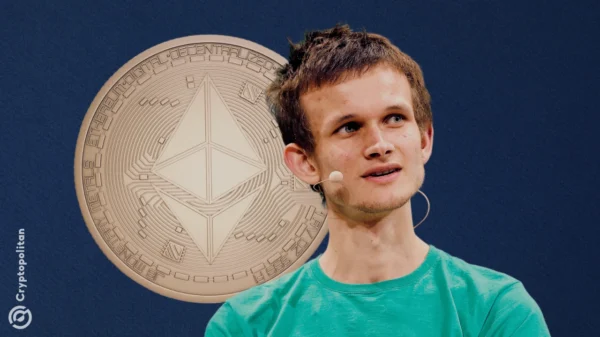
The Ethereum development team, spearheaded by Vitalik Buterin, has disclosed a series of pivotal improvements to the network”s base layer. Among these updates is the introduction of Fork-Choice Enforced Inclusion Lists (FOCIL), designed to mandate that validators include all transactions in a block, thereby enhancing the network”s resistance to censorship. Additionally, the roadmap includes the integration of zero-knowledge (ZK) proofs for Layer 1 validation, which will further secure Ethereum”s cryptographic framework.
One of the most notable shifts in Ethereum”s strategy is the move towards maximizing base-layer upgrades rather than primarily relying on Layer 2 rollups. This transition is expected to simplify Ethereum”s architecture, making it more flexible and user-friendly. A key feature in this upgrade is account abstraction as proposed in EIP-8141, which is intended to streamline the user experience significantly.
The increasing institutional adoption of Ethereum is evidenced by recent initiatives such as BNP Paribas Asset Management launching tokenized shares of a French money market fund on the Ethereum blockchain. This move highlights the growing institutional interest in the platform, marking a shift from its initial applications. The tokenized shares, developed on AssetFoundryTM by BNP Paribas, will facilitate controlled access for qualified participants, paving the way for broader institutional applications of blockchain technology in traditional finance.
As Ethereum faces rising competition from high-performance chains like Solana, its roadmap reflects a commitment to adapt and thrive. These rival networks are gaining attention due to their high throughput, lower transaction costs, and more user-friendly interfaces. Historically, Ethereum has relied heavily on various rollups, which have introduced complexities related to liquidity and user experience. However, the focus on base-layer improvements and the potential for ZK-native validation may help Ethereum regain its competitive edge.
The Ethereum team is strategically working to balance performance with security, ensuring that the network remains decentralized, resistant to censorship, and cryptographically secure. As competitors continuously refine their strategies, Ethereum”s ongoing advancements are crucial for maintaining its reputation as a reliable and secure blockchain solution.
These continuous upgrades signify a noteworthy evolution in Ethereum”s development trajectory. By prioritizing enhancements to its base layer and incorporating vital technologies like ZK proofs, Ethereum is positioning itself for long-term growth and sustainability. As performance-driven competitors strive to enhance their offerings, Ethereum”s focus on security and neutrality may prove to be a decisive factor in its ongoing success.